
TL;DR
Step into a chilling world of delusion with Arne Mattsson's "Vaxdockan," a cult classic finally restored and ready to captivate. Per Oscarsson delivers a haunting performance as a lonely night watchman who becomes utterly obsessed with a mannequin, blurring the lines between reality and his desperate pursuit of companionship. This surreal and poignant film explores themes of isolation, suppressed aggression, and the tragicomic search for affection, echoing the psychological depth of horror greats like Hitchcock and Argento. Discover the unsettling power of this overlooked gem and the captivating performances of Oscarsson and Gio Petré. Dive into the full review to uncover the disturbing beauty of this cinematic descent.
A Chilling Portrayal of Delusion: Per Oscarsson’s Descent into Obsession with a Mannequin
Wax figures and museums possess a unique quality, simultaneously unsettling and captivating.
While institutions like Madame Tussauds in London are renowned, my memory gravitates towards more unconventional and often unsettling wax figure collections encountered globally. These exhibits frequently feature figures that are less lifelike and more frightening, absurd, or peculiar. Notable examples include the somewhat dilapidated 1980s Hollywood Wax Museum on Hollywood Blvd, the curious exhibition at the Stazione di Milano Centrale in Milan, and, naturally, the eerie mannequins housed in the basement of Dario Argento’s horror boutique, Profondo Rozzo, in Rome.
Wax figures naturally lend themselves to the horror genre.
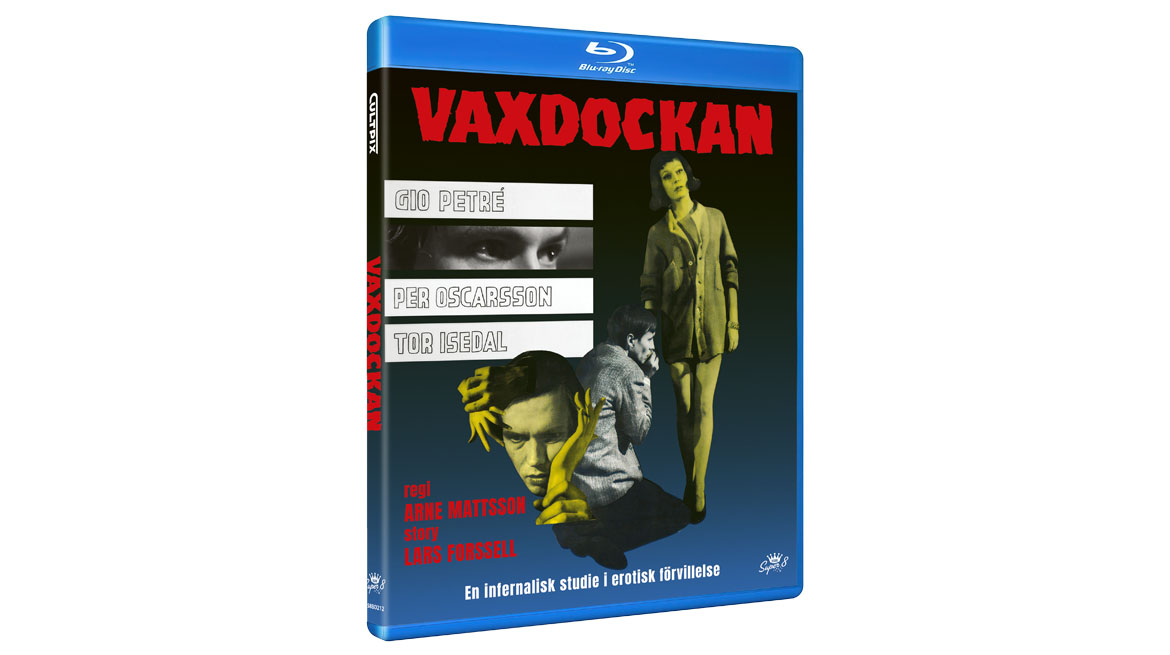
This is exemplified by Arne Mattsson’s 1962 film, “infernal study in erotic delusion,” Vaxdockan. While Mattsson is widely recognized for his atmospheric and subtly brilliant Hillman detective novels, Vaxdockan unequivocally demonstrates his proficiency in crafting more unsettling and psychologically dark horror narratives.
Vaxdockan stands as a sadly overlooked cult film, particularly for those intrigued by Per Oscarsson’s intense portrayal of a man succumbing to delusion and obsessive attachment to a mannequin.
The film’s cinematography and camera work evoke comparisons to both Argento and Mario Bava. It is plausible that William Lustig found inspiration in Vaxdockan for his 1980 film Maniac. Furthermore, it is evident that screenwriter Lars Forsell drew parallels to Norman Bates and Psycho (1960).
The film revolves around the night watchman Lundgren.
Masterfully and intensely portrayed by Per Oscarsson, Lundgren is an eccentric, middle-aged man desperate for companionship, living in isolation within a dilapidated tenement on the outskirts of Stockholm. However, the other tenants—including Tor Isedal, Bengt Eklund, Agneta Prytz, and Olle Grönstedt—prove to be equally enigmatic.
One evening, Lundgren falsely reports a burglary to the police, claiming he witnessed someone stealing a mannequin. In truth, Lundgren himself has brought the doll (portrayed by Gio Petré) to his desolate apartment. There, he soon begins to clothe her, converse with her, and acquire gifts. He perceives her as the only one “who understands him,” and as his infatuation with the doll deepens, he abandons all other responsibilities.
He ceases attending work, isolates himself in the apartment, and neglects rent payments. The landlady (Elsa Prawitz), who harbors a particular affection for Lundgren, becomes suspicious of his behavior, a sentiment shared by the other neighbors. Upon forcibly entering his attic apartment and discovering Lundgren in bed with the mannequin, he experiences a complete psychological breakdown.
Vaxdockan is an eerie, surreal, and unexpectedly poignant film.
While not overtly violent, the film is imbued with a pervasive sense of suppressed aggression and anxiety concerning femininity, alongside a lonely individual’s desperate, albeit unconventional, pursuit of affection. Mattsson presents this narrative with exceptional tragicomic effectiveness.
Per Oscarsson was a distinctive figure in Swedish cinema. A rebellious individualist, he garnered acclaim for roles in films such as The Brothers Lionheart (1977) and The New Land (1972), though he remains perhaps most famously remembered for his controversial live broadcast appearance on Hylands hörna (1966). In Vaxdockan, he delivers one of his most compelling performances, characterized by its profound tenderness and vulnerability.
Gio Petré notably appeared in Ingmar Bergman’s Wild Strawberries (1957). Prior to Vaxdockan, she had also featured in Arne Mattsson’s 1958 film Mannequin in Red. Internationally, she gained prominence as an icon of “the Swedish sin,” starring in films such as I Am a Woman II (1968), Like the Naked Wind of the Sea (1968), and Ann and Eve – The Erotic (1970).
Her portrayal in Vaxdockan is genuinely unsettling and significantly contributes to the surprising and impactful conclusion.
The film is now available for the first time in a digitally restored version by the Swedish Film Institute, meticulously sourced from 35mm original negatives and sound negatives. The Blu-ray disc features extensive bonus material, including a video essay on Gio Petré by Rickard Gramfors, an introduction by Mats Helge Olsson—who collaborated with both Arne Mattsson and Per Oscarsson—and a commentary track with film critic Joni Hyvönen and Rickard Gramfors (Klubb Super 8), alongside a gallery of posters and stills. Additionally, the release includes Per Oscarsson’s directorial debut, Ebon Lundin (1973)—a tragicomic odyssey through Stockholm that follows a misunderstood man who leaves his factory job. As he wanders the city in search of love and community, he extends aid to the intoxicated, the impoverished, and the marginalized.
Klubb Super 8 sent review copies for this review. Senders of material have no editorial influence on our reviews, and we always write independently with our readers and consumers in focus.
