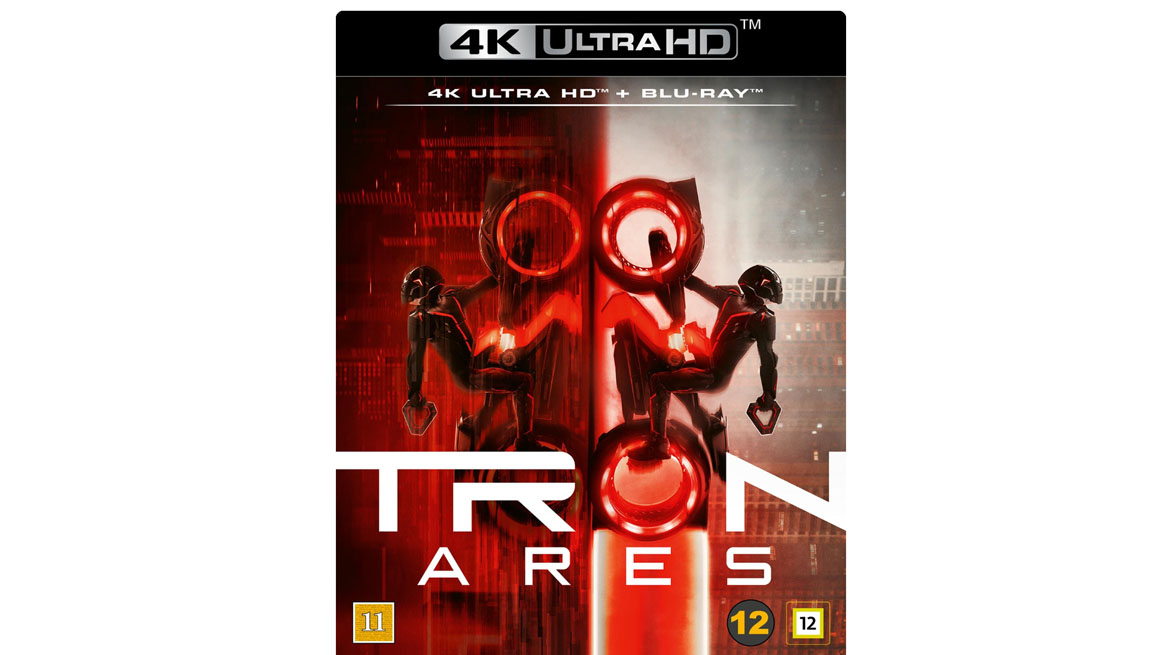

Tron: Ares takes place fifteen years after the events of Tron: Legacy. Sam Flynn is no longer present, and Eve Kim (Greta Lee), alongside her sister, assumes control of the company ENCOM. Julian Dillinger (Evan Peters) continues to manage the company, emulating his grandfather’s controversial legacy, and is now pursuing a very lucrative deal with the defense department. He has successfully created physical manifestations of digital creations in the real world. The challenge is that these creations do not endure beyond 29 minutes, initiating the hunt for the so-called permanence code. ENCOM has managed to locate it, and now a high-stakes pursuit ensues. Eve Kim is relentlessly pursued by Ares (Jared Leto), Dillinger’s most advanced program. However, the more time Ares spends in the real world, the more he begins to realize that his mission isn’t entirely righteous, and slowly he starts to question his fundamental purpose.
The Original Film and Its Legacy
I have always been a fan of the original film from 1982, which can be a challenge for modern audiences who may not fully grasp the incredible craftsmanship the film actually represents. When the digital scenes were created, everything was coded by hand, and for previewing, the material had to be transferred to actual film and viewed in a movie theater to detect if a single pixel had been missed.
It was incredibly time-consuming work, and considering the film premiered 44 years ago, its achievement becomes even more impressive. The film laid the groundwork for much of what we take for granted today.
The 2010 Sequel
The first Tron was not a commercial success upon its theatrical release but found its audience much later. In 2010, a sequel was released. It built upon the original film, introducing Kevin Flynn’s (Jeff Bridges) son, who continued the narrative.
It’s been 16 years since I saw the second one, and I recall finding it average but nonetheless entertaining. It also wasn’t a major success, but it too has found its audience retrospectively. I still play the soundtrack by Daft Punk.
An Unexpected Sequel
The franchise unexpectedly saw the release of another sequel. Without significant prior marketing, Tron: Ares appeared in cinemas, and this time the film mostly takes place in our world. This is a concept that presents both engaging possibilities and frustrating illogicalities.
A considerable number of elements in the film are executed effectively. It is commendable that a film set in a digital world with digital creations has largely been made practically. The rooms are built in reality, and the light cycles are real bikes with stunt riders on board. I appreciate that. The motorcycle chase through the city is well-executed and visually stunning, leaving nothing to be desired.
Overall, the technical execution is commendable: costumes, environments, and effects are expertly crafted. The challenge lies in the film’s ability to engage the audience. While Greta Lee delivers a competent performance, her acting style struggles to forge the necessary connection for audience investment in her character’s journey. Similarly, Jared Leto’s portrayal fails to generate a compelling experience for the viewer.
A Thin Script and Questionable Narrative Choices
The script is paper-thin and confusing simultaneously. All narrative twists and challenges unfold without significant setbacks, and the characters lack meaningful development.
The ending is stylish but narratively perplexing. Amidst epic battles, cars drive back and forth without reacting to what’s happening around them. Fighter jets shoot directly into the city among buildings, disregarding consequences or principles of realism. This illustrates the film’s conflicting nature, being simultaneously engaging and conceptually flawed.
Reception and Dashed Future Plans
Tron: Ares significantly underperformed at the box office, marking it as one of Disney’s more expensive missteps in 2025. The film maintains roughly the same style as the previous installments. It is evident that the filmmakers had hoped for a commercial success and a potential fourth film, as the end credits offer a glimpse into planned future developments. A continuation now appears improbable, though it is worth noting that past precedents exist for unexpected revivals.
The UHD Release: A Technical Triumph
The UHD release, however, is flawless. The picture is in 2160p (4K) with both Dolby Vision and HDR10. It’s a BD-66 disc, which provides ample capacity for a high bitrate. This is especially noticeable in fast pans where motion remains fluid and free of artifacts.
The colors are vibrant, the black levels are perfect, and The Grid has never looked better. The most visually striking part of the film is the motorcycle chase through the city, where the entire color palette is utilized.
The Sound: Powerful but Somewhat Tiring
The sound comes in Dolby Atmos, and this time I didn’t need to turn up the volume as one often has to with Disney’s releases. The film delivers an enormous soundscape.
Although the sound is good, I find the mixing somewhat tiring, and the film feels loud throughout. This isn’t the release’s fault, but the film exhibited the same characteristics in cinemas too. The sound is well-crafted, and towards the end especially, the immersive sound design becomes particularly engaging, with effects expertly positioned around the listener.
Bonus Material
The UHD disc contains no bonus material, but the accompanying Blu-ray disc does. For a modern release, there is a substantial amount of behind-the-scenes material, offering in-depth exploration of various aspects. There are also deleted scenes.
Summary
Tron: Ares leaves a lot to be desired, especially regarding story and structure. However, as an immediate, bombastic entertainment experience, it is remarkably effective. Especially on UHD, where the film’s audiovisual experience is incredibly impressive. Consequently, I still recommend Tron: Ares. This film serves as an excellent showcase for a home theater system, and for devoted Tron fans, it features a truly remarkable sequence that offers significant nostalgic value.
SF-Studios sent review copies for this test. Senders of material have no editorial influence on our tests; we always write independently with our readers and consumers in mind.
