
TL;DR
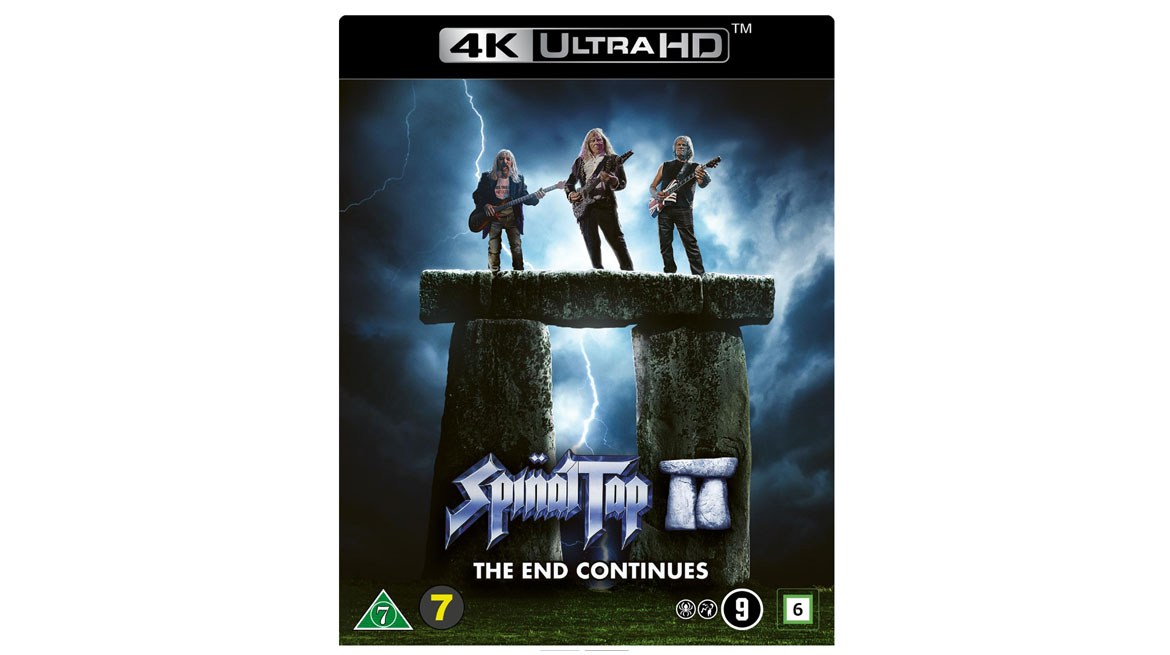
Spinal Tap is back in *Spinal Tap II – The End Continues*, but this comeback tour stumbles. While the original mockumentary magic is attempted, the film struggles with inconsistent filming style and a serious lack of the chaotic adversity that made the first one legendary. Despite these flaws and the somber shadow of director Rob Reiner's passing, the band's signature humor, brilliant acting, and musical moments still shine through, making it an entertaining, if imperfect, reunion. See if this sequel rocks or rolls over.
Documentary filmmaker Marty DiBergi (Rob Reiner) returns to chronicle the famously unconventional band Spinal Tap. In Spinal Tap II – The End Continues, we once again encounter the band’s three members Hubbins (Michael McKean), Nigel Tufnel (Christopher Guest), and Derek Smalls (Harry Shearer), as they are compelled to embark on a comeback after over 15 years of estrangement. Their immediate challenge involves finding a new drummer, a task complicated by the band’s infamous history of drummers meeting untimely ends. The film offers insight into the complexities of restarting a long-dormant endeavor and the inherent challenges involved. The persistent camera crew provides a continuous, behind-the-scenes perspective on their journey.
A Film Tinged with Tragedy
Spinal Tap II – The End Continues is viewed through a somber lens, irrevocably altered by the tragic events concerning Rob Reiner and his wife in December of last year (2025). While this review focuses on a comedic work, it is nonetheless virtually impossible to separate the viewing experience from the profound impact of Rob Reiner’s untimely passing, given that this represents his final directorial effort.
The Mockumentary Format and the Film’s Flaws
Mirroring its predecessor, **This Is Spinal Tap**, the sequel employs the mockumentary format, with cameras purporting to capture unscripted events. However, despite a strong desire for this installment to match the comedic brilliance of the original, it ultimately falls short. A primary concern lies in its inconsistent adherence to the mockumentary aesthetic; there are instances where the filmmaking deviates significantly from the spontaneous, hand-held style characteristic of the genre, instead adopting conventional cinematic techniques.
A salient example occurs in a scene featuring a character on a staircase engaged in a FaceTime call. The shot composition immediately betrays the mockumentary conceit: no visible camera operator is present to capture the phone’s screen, nor is there plausible space for one on the narrow staircase. Instead, the scene is framed and edited in a manner typical of conventional narrative cinema, thereby undermining the documentary illusion.
The Lack of Adversity and Drama
The original film excelled due to its relentless barrage of comical misadventures. A consistent cascade of setbacks and failures lent the band’s journey its signature tragicomic essence. In contrast, Spinal Tap II – The End Continues largely meanders, lacking substantial dramatic conflict. Minor disagreements are introduced only to be resolved with facile simplicity and speed. Several narrative arcs are established with significant build-up, only to culminate in anticlimactic resolutions.
Significant plot developments are reserved for the film’s final act. However, the immediate commencement of credits over the concluding scenes obscures pivotal narrative elements, making them challenging to fully discern and comprehend. Given the film’s modest 84-minute runtime, the decision to superimpose credits over the climax is perplexing and appears to have unnecessarily curtailed the narrative’s resolution, which could have benefited from an additional few minutes.
Humor, Acting, and Musical Elements
Despite the criticisms outlined, Spinal Tap II – The End Continues is not without its merits. The film contains numerous redeeming qualities, including genuinely humorous moments that elicited hearty laughter. The ensemble delivers consistently brilliant acting performances, further bolstered by the appearances of various music legends portraying themselves, which significantly enriches the experience. Moreover, the cast’s continued musical contributions, performing their own songs, authentically perpetuates the enduring legacy of Spinal Tap.
Picture and Sound
As previously noted, Spinal Tap II – The End Continues adopts a documentary style, yet this does not detract from its visual quality. The film exhibits a highly cinematic aesthetic that is particularly impressive in this UHD release. The picture is delivered in native 2160p, utilizing HDR10 as the primary dynamic range format. A consistently stable and robust bitrate, typically ranging from 70–80 Mbps, ensures a pristine and meticulously detailed presentation. Skin tones are rendered naturally, and the intentionally exaggerated stage lighting during concert sequences achieves outstanding luminance without encountering highlight clipping. These scenes represent the film’s visual zenith.
The audio is presented in Dolby Atmos. While the film may not serve as a dedicated sound design showcase, the mix nevertheless offers numerous instances to demonstrate its capabilities. Concert sequences benefit from excellent bass reproduction and distinct instrument separation. Dialogue remains consistently clear and well-localized in the center channel. The atmospheric channels are employed judiciously yet effectively, enhancing the mockumentary’s spatial dimension.
Bonus Features
The disc includes a substantial collection of bonus material, comprising several deleted scenes, interviews with the cast, and a concise documentary detailing Rob Reiner’s involvement in the project. Additionally, a commentary track masterfully interweaves fictional elements with reality, a characteristic feat unique to the Spinal Tap universe.
In conclusion, Spinal Tap II – The End Continues warrants recommendation for several compelling reasons. Firstly, it serves as a tribute to Rob Reiner, an exceptionally talented and versatile director and actor whose career began with This Is Spinal Tap and concluded with this final cinematic endeavor. Secondly, despite being more subdued than its predecessor, the film delivers numerous genuinely humorous sequences and remains highly entertaining.
SF Studios provided review copies for the purpose of this evaluation. Material distributors exert no editorial influence on our reviews; we maintain complete independence, prioritizing the interests of our readers and consumers.
