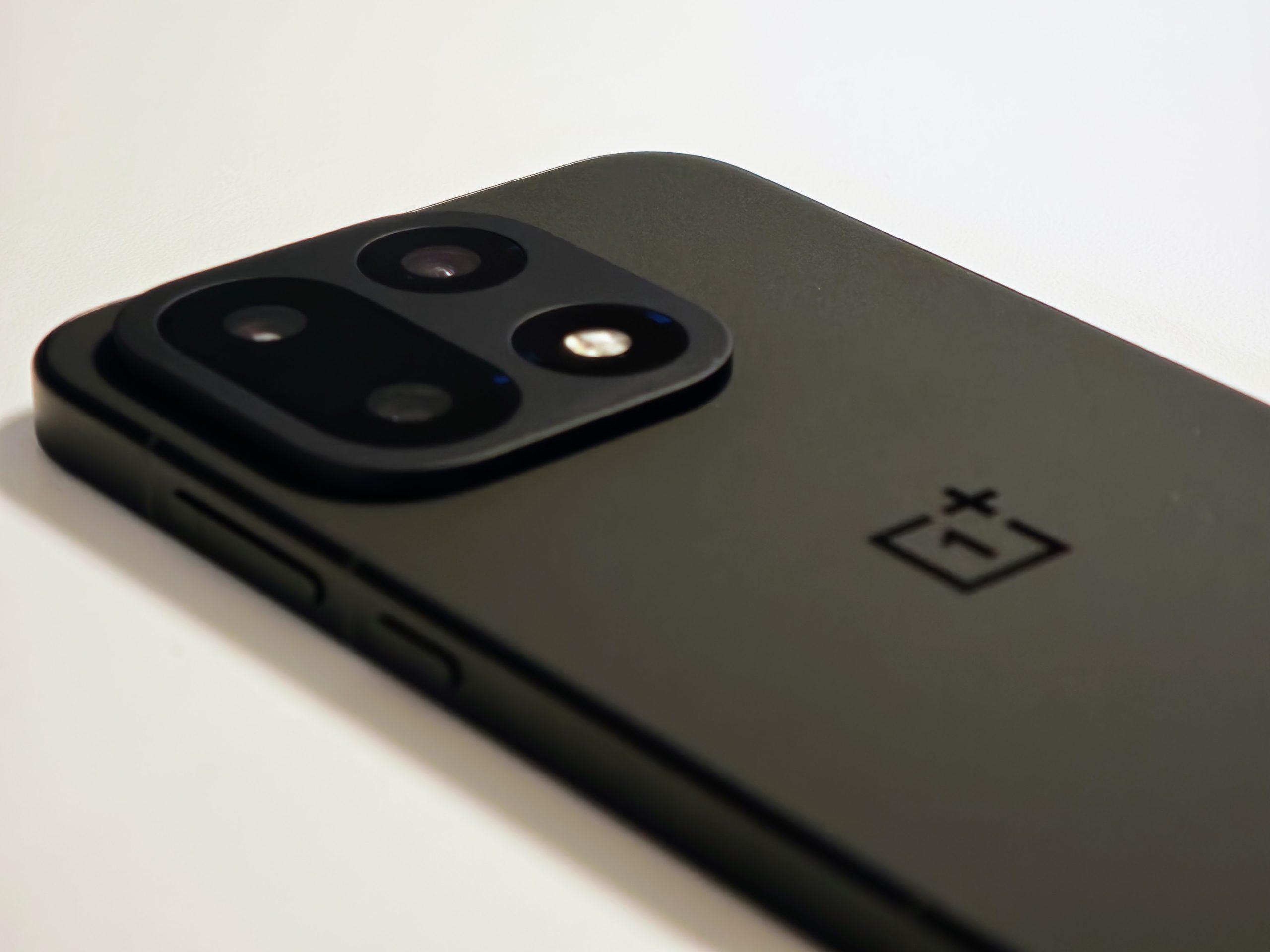

Over its twelve years on the market, OnePlus has transitioned from a company known for “near-flagship” phones at mid-range prices to an established player with devices across most price segments. This marks the first OnePlus phone we at Senses are reviewing, although we have previously tested and been satisfied with both their tablets and smartwatches, and I personally have owned several earlier models.
Now, it’s time to evaluate a true flagship. OnePlus promotes it with the slogan “Power On. Limits Off,” highlighting not only maximized performance but also a larger battery capacity than any competitor has managed to integrate. How effectively does the OnePlus 15 compete within its segment? We will now delve into our findings.
Design and Build Quality
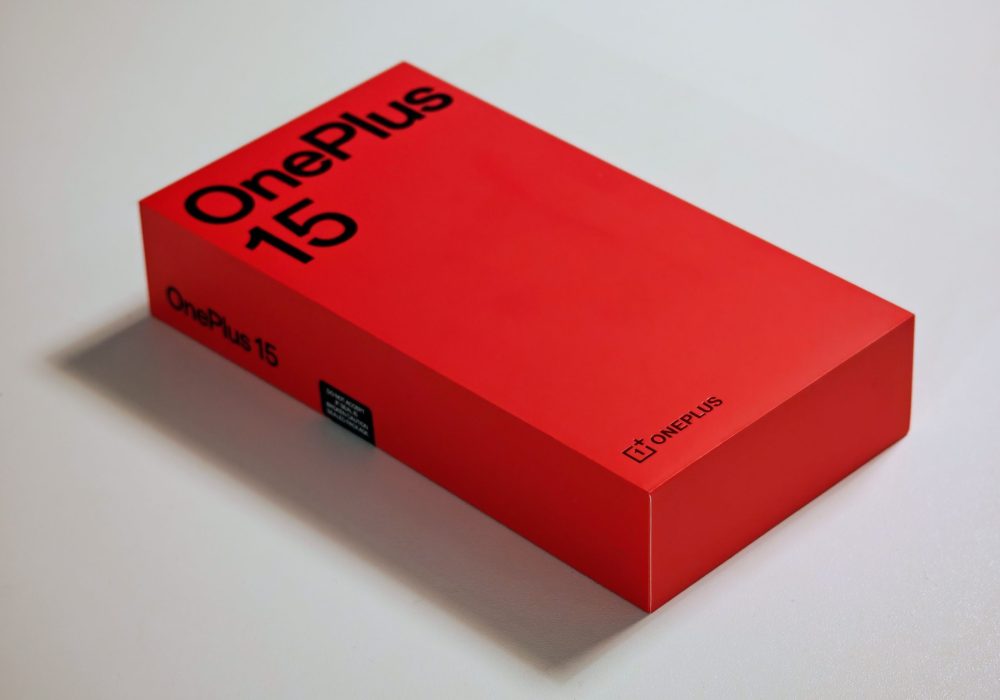
Upon unboxing the OnePlus 15 from its sleek red packaging, the initial impression is that the design appears quite generic and anonymous.
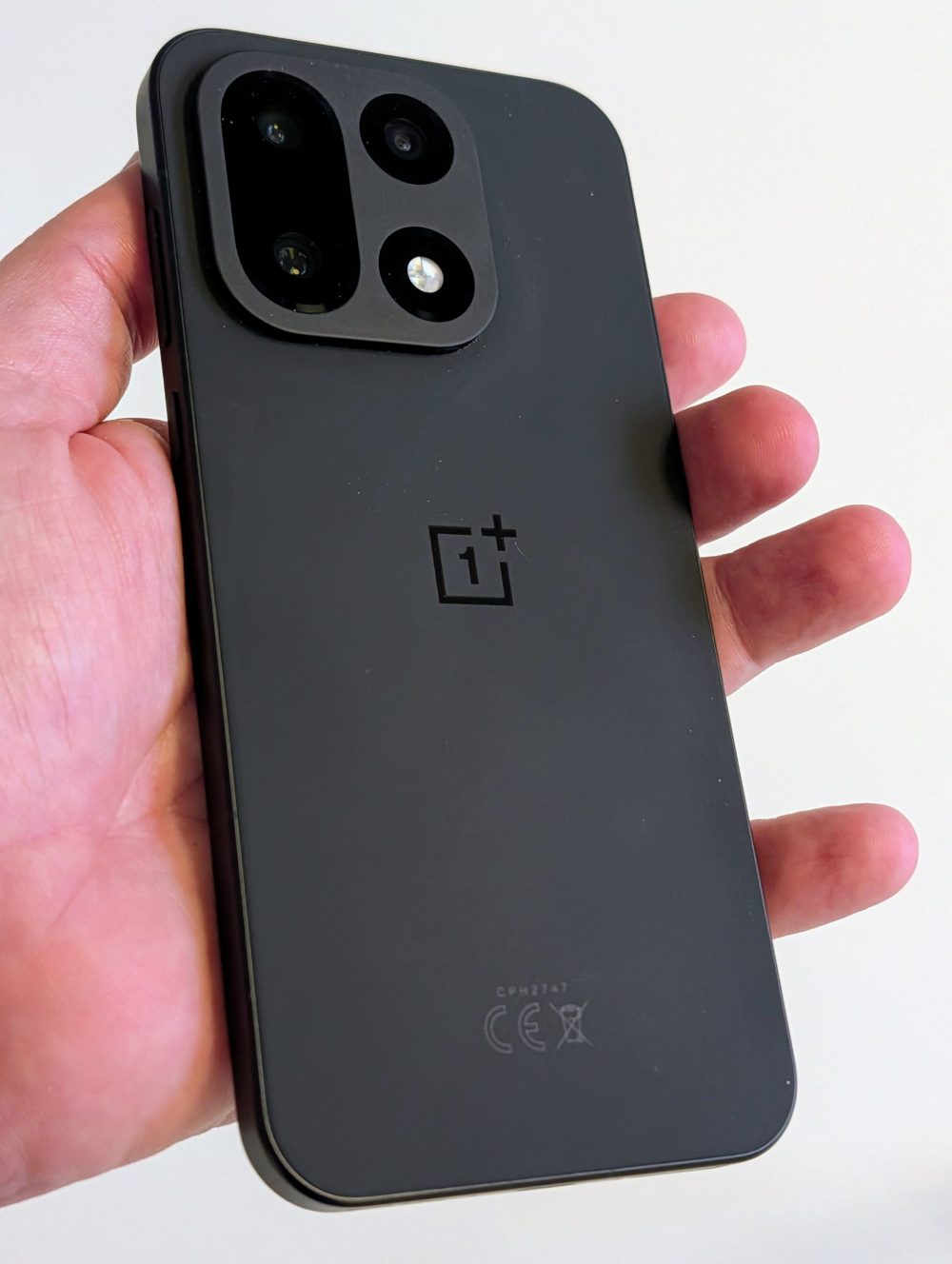
The model under review comes in “Infinite Black.” It features a matte black finish with a textured back that provides exceptional grip, ensuring a secure hold and resistance to fingerprints. The aluminum frame contributes to a robust in-hand feel. The camera module protrudes minimally from the phone’s rear, allowing it to rest completely stable on a flat surface despite its off-center placement.
The build quality is remarkably high. This is further underscored by the phone’s comprehensive IP rating, encompassing IP66, IP68, and IP69K. This certification theoretically indicates the phone’s ability to withstand high-pressure water jets at 80-degree water and 100 bar pressure.
For users seeking a more distinctive aesthetic, the “Sand Storm” color option is available. This variant features a fiber-reinforced polymer back, which mitigates the risk of cracks, while its frame is treated with Micro-Arc Oxidation (MAO) to provide a ceramic surface reputedly harder than titanium.
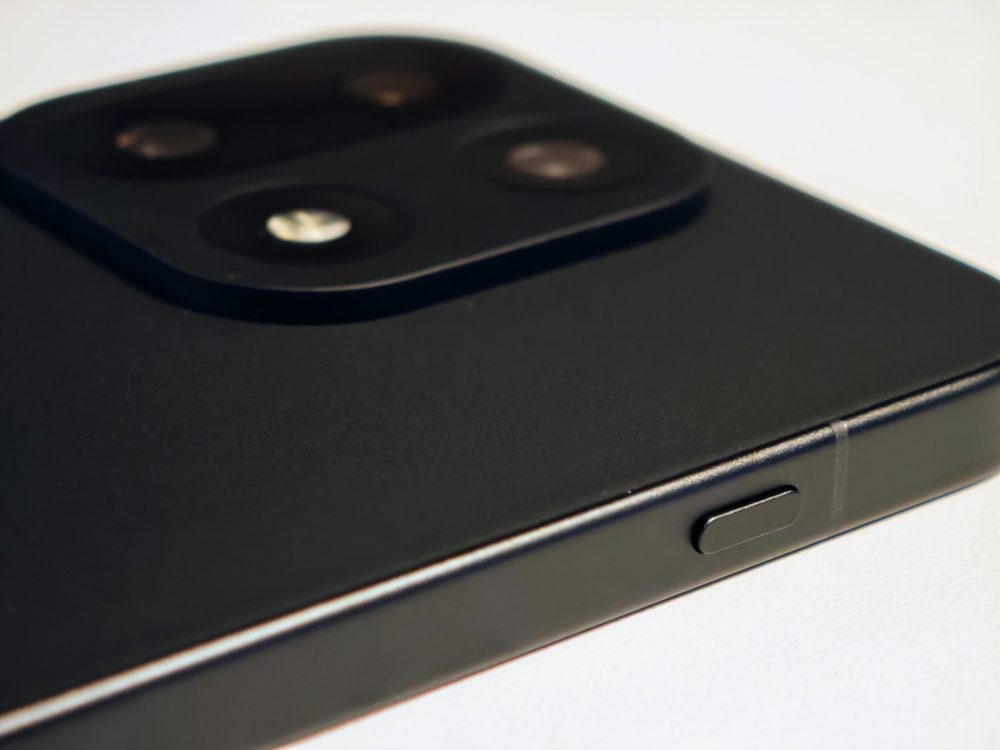
The most significant design alteration, and one that may provoke debate among loyal OnePlus enthusiasts, is the removal of the iconic “Alert Slider.” This mechanical switch has been replaced by a new “Plus Key.”
The Plus Key is a programmable button for various functions. However, it lacks the direct, tactile immediacy of the Alert Slider for quickly switching to silent mode without retrieving the phone from a pocket. This change is somewhat regrettable, as the Alert Slider was a distinctive feature that set OnePlus apart. Nevertheless, in 2026, many users keep their phones on silent by default, which may explain the rationale behind this feature’s evolution.
The stereo speakers deserve specific mention. They deliver surprisingly impressive audio quality for a mobile device.
Display
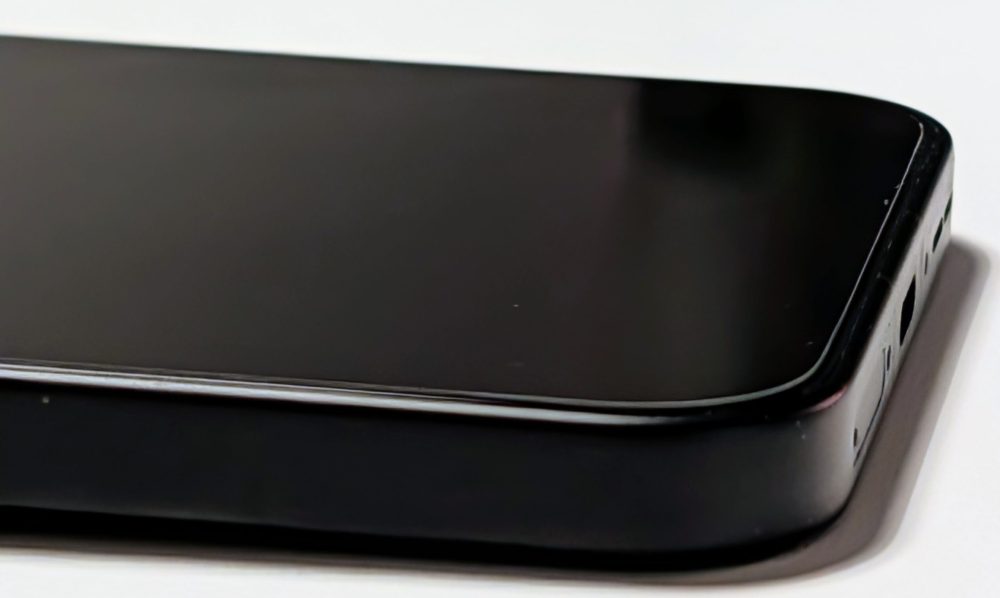
The display is a flat 6.78-inch LTPO OLED panel. We commend OnePlus for adopting a completely flat display, as it mitigates the risk of accidental touches and simplifies screen protector installation (a factory-installed protector is included upon delivery).
The resolution is 1.5K (2772 x 1272). While this resolution might initially seem modest for a flagship device, with a pixel density of 450 ppi, we observed no discernible difference compared to a 2K screen in practical use. OnePlus claims this choice was made to conserve battery life and facilitate a higher refresh rate of 165 Hz.
For users sensitive to flickering, it is relevant to note that the screen utilizes high-frequency PWM dimming at 2160 Hz at low brightness levels.
The display supports up to a 165 Hz refresh rate. This higher frequency is exclusively activated in compatible games. Otherwise, during menu navigation or browsing, the refresh rate operates at 120 Hz, yet the user experience remains exceptionally fluid. Responsiveness is instantaneous, largely due to a dedicated touch chip that provides an “instant touch sampling rate” of 3200 Hz, resulting in an exceptionally responsive touch experience.
Performance and Software
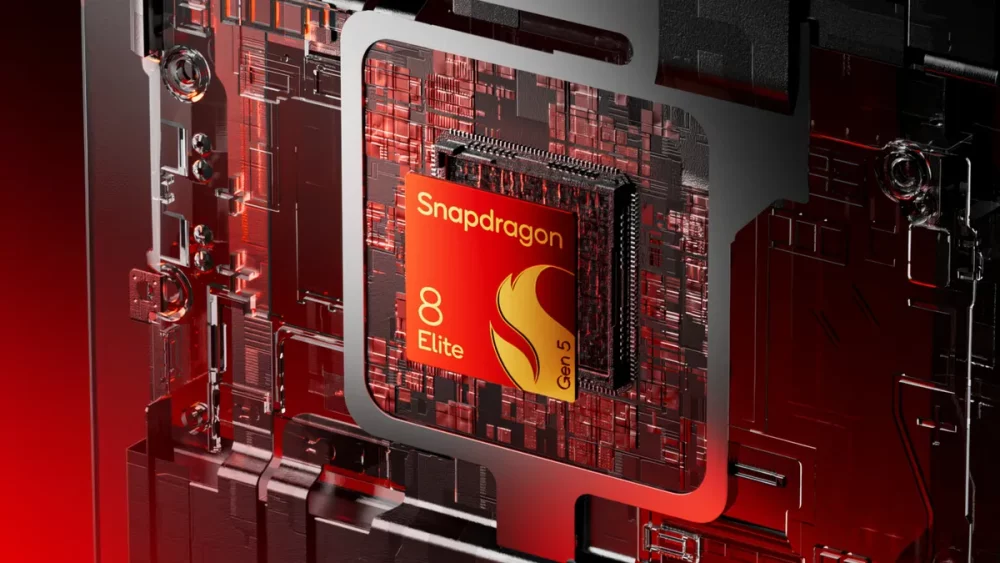
Powering the device is the Snapdragon 8 Elite Gen 5 processor with Qualcomm’s Oryon cores clocked at an impressive 4.6 GHz. This is complemented by a separate graphics chip and a dedicated Wi-Fi chip designed to ensure connection stability. We are testing the model equipped with 16 GB LPDDR5X Ultra+ RAM, delivering exceptionally rapid performance. Regardless of the task, the device responds with remarkable speed.
At the beginning of our testing period, the phone exhibited issues with heat generation, where it could experience crashes during demanding benchmarks such as 3DMark. However, this was never observed during normal usage, only during extended benchmark scenarios. OnePlus appears to have addressed this with a software update that optimized processor load management, and we can no longer reproduce the issue even under rigorous stress testing.
During prolonged gaming sessions in Genshin Impact or Call of Duty Mobile (where the 165 Hz mode is utilized), performance remains stable. The cooling system, which OnePlus terms “360 Cryo-Velocity,” featuring a vapor chamber and aerogel components to insulate heat from the screen, effectively manages thermal output.
The software is OxygenOS 16, based on Android 16. It operates with remarkable smoothness, attributed to what OnePlus calls “Parallel Processing 2.0.” The interface is clean and elegant. While we generally prefer a completely stock Android experience (such as on Pixel devices), this remains a highly competent implementation.
The “Plus Mind” AI initiative is deeply integrated. Users can press and hold the Plus Key to analyze on-screen content and save it to their “Mind Space.” While it functions adequately for saving and organizing information, its practical utility during our testing period felt somewhat limited, occasionally presenting as a novelty rather than an indispensable feature. It can be seen as an advanced version of “Pixel Screenshots” found on Pixel phones, with the significant advantage of full functionality in Swedish.
OnePlus promises four major OS updates and six years of security updates. This is an acceptable policy, though competitors like Samsung, Google, and Apple currently offer more extensive support.
Battery and Charging
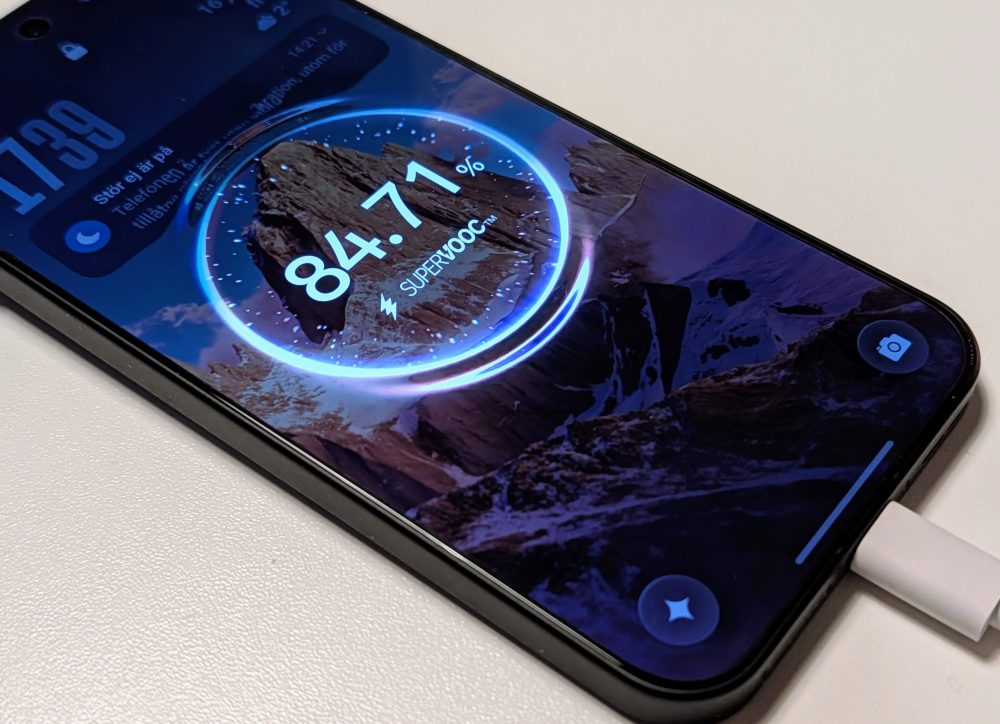
This aspect represents the phone’s most significant strength. OnePlus has managed to integrate an impressive 7300 mAh capacity into this relatively slim phone thanks to its “Silicon NanoStack” technology. Battery life is, to put it mildly, exceptionally robust. During the testing period, we consistently achieved two, and occasionally almost three, days of usage on a single charge.
The phone supports charging speeds up to 120 W. However, achieving this requires a special OnePlus charger, which, regrettably, is not included in the retail package. With the appropriate charger, a full battery charge takes just over 40 minutes, providing a 50% charge in approximately fifteen minutes. When tested with our standard office chargers, we reached a maximum of about 50 W, resulting in a full charge taking approximately an hour.
The phone supports wireless charging. Here too, specialized OnePlus chargers with “AirVOOC” support are required to achieve maximum speeds of up to 50 W. With standard Qi chargers, the power is limited to 15 W. Unfortunately, the phone lacks built-in magnets for Magsafe / Qi2 compatibility.
Camera
OnePlus long collaborated with Hasselblad; however, that partnership has concluded, and they now utilize their proprietary “DetailMax Engine” technology. The main camera incorporates a Sony IMX906 sensor. The software employs a technique of stacking unexposed RAW data to optimize dynamic range. In daylight, results are generally good, but occasionally the software processing can be overly aggressive.


The 50 MP main camera typically captures high-quality images in daylight. Photos are sharp, colors are vibrant, and dynamic range is good. However, in low-light conditions, the limitations of the sensor size become apparent.


Photos in low light tend to exhibit more grain and lack the crispness observed in competitors such as the Pixel 10 Pro XL. Nevertheless, the output is far from poor, and in some instances, differentiating between photos from the OnePlus 15 and the Pixel 10 Pro XL is challenging. Closer inspection on a larger display reveals the Pixel’s superior detail, evident in aspects like improved wall texture, reduced smudging, and sharper rendition of tree branches.








The telephoto lens, offering 3.5x optical zoom, performs acceptably, though it does not deliver the exceptional results seen in rival flagships such as the Google Pixel 10 or Xiaomi 15 Ultra. In well-lit conditions or for indoor portraits, its performance is commendable.
Its performance degrades in suboptimal lighting. While OnePlus utilizes its “DetailMax Engine” technology to compensate with software processing, this can lead to images appearing somewhat overprocessed or lacking fine detail. Nevertheless, the output is not poor, simply not fully competitive with other flagship devices.
On the video front, stabilization is excellent, and the capability to record in 4K at 120 fps with Dolby Vision is impressive. However, a notable drawback is the discernible transition when switching between lenses during recording, impacting both color balance and field of view.
Below is a selection of photographs captured during our testing.








Conclusion
The OnePlus 15 foregoes some of its distinctive design elements and absolute top-tier camera performance in favor of potentially offering the market’s leading battery life and overall performance.
The recommended retail price is approximately 11,990 SEK, however, at the time of this review, the device is available for under 10,000 SEK. This price point is significantly lower than competitors’ “Ultra” models. At this value, consumers acquire a device that is exceptionally fast, highly durable, and features unparalleled battery longevity.
For users prioritizing absolute camera performance, alternatives such as a Pixel, Samsung S-series, or Xiaomi Ultra device may be more suitable. However, for those who frequently engage in gaming, media consumption, or seek extended battery life, the OnePlus 15 presents a compelling option.
The OnePlus 15 stands as one of the most competitive offerings currently available in the Android ecosystem. With an enhanced camera system and update longevity on par with Google or Samsung, it would undoubtedly achieve a higher rating. As reviewed, it secures a commendable score of eight.
OnePlus sent review units for this test. Senders of material have no editorial influence on our tests; we always write independently with our readers and consumers in focus.
