TL;DR
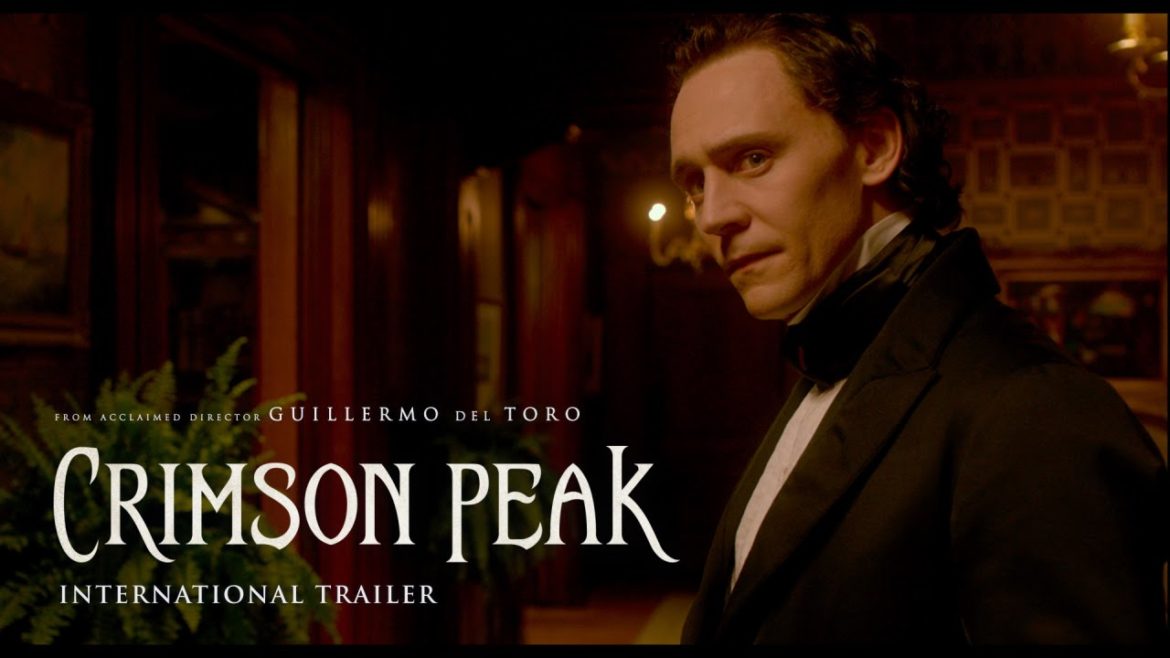
Guillermo Del Toro's Crimson Peak is a visually stunning costume horror film that unfortunately gets lost in its own genre. While it boasts beautiful set design, costumes, and strong performances, particularly from Tom Hiddleston, it struggles to deliver genuine surprise or consistent scares. The initial romance and suspense are compelling, but the plot becomes predictable, leaning on jump scares rather than true dread. Despite its earnest efforts and Del Toro's signature style, the film ultimately falls short of its potential, offering decent entertainment but lacking the originality and impact of his best work. Want to know if its beauty is enough to overcome its shortcomings? Read the full review!
Guillermo Del Toro’s costume horror offering presents some compelling moments, but ultimately falls short of delivering significant surprise, despite its earnest efforts.
“Old, creepy houses inhabited by ghosts burdened with memories” constitutes a well-trodden genre. Numerous films explore this theme, with varying degrees of success. Examples range from less successful ventures such as The Haunting and Mama, to more critically acclaimed titles like The Others and Barnhemmet (which Del Toro co-produced). Director Guillermo Del Toro garnered international acclaim with his profoundly original and deeply personal film, Pan’s Labyrinth, a work characterized by intense emotional resonance, stunning visuals, and unflinching realism, ultimately earning multiple Oscar nominations. Since then, the industry has maintained a keen interest in this visually distinctive and darkly imaginative storyteller, whose previous endeavors include his foray into the horror game genre with the now-cancelled Silent Hills (P.T) collaboration with Kojima, as well as well-received comic book adaptations such as Hellboy and Pacific Rim. With Crimson Peak, Del Toro undertakes the creation of a narrative set within the conventions of period costume drama and supernatural horror.
The setting is Buffalo, NY, in the late 1800s. A wealthy industrialist is being courted by Thomas Sharpe (Tom Hiddleston), a British gentleman seeking investment in mechanized equipment designed to expedite red clay extraction, thereby improving brick production. Sharpe soon develops a romantic interest in the industrialist’s daughter, Edith (Mia Wasikowska), an independent woman who aspires to become a writer. As a child, Edith was visited by the spectral apparition of her deceased mother, who delivered the ominous warning: “beware of Crimson Peak.” However, Thomas’s musically inclined sister, Lucille (Jessica Chastain), appears less than enthusiastic about her brother’s burgeoning relationship. As circumstances intensify, Edith is compelled to relocate to England with the siblings and her new husband, Thomas Sharpe, to reside at Abberdale Hall. This residence proves to be as unsettling as its initial appearance suggests, and Edith soon discovers that its secrets are far more profound than she initially anticipated. The blood-red clay staining the landscape conceals a disturbing truth that has long been suppressed.
Discussing Crimson Peak in detail without revealing key plot points proves challenging. In essence, the film operates as a horror-thriller, incorporating both malevolent spirits and an intricate murder mystery. Del Toro, serving as both writer and director, establishes the characters and setting with commendable efficiency. Despite the presence of certain political clichés, Edith’s character and motivations are clearly defined. For example, she is informed by a male publishing executive that she should not write about ghosts, as “women should write about romance.” This statement, while reflective of the era’s prevailing attitudes, also ironically mirrors a central aspect of the film itself. Crimson Peak ironically demonstrates its greatest strengths and sensitivity during its initial sequences, where romance and suspense take precedence. The audience is drawn into the narrative and becomes intrigued by Thomas Sharpe and his enigmatic sister. What are their true intentions? Is Thomas sincere in his affections for Edith, or is he merely seeking to exploit her father’s wealth? A Viennese waltz sequence stands out as a highlight, reminiscent of a culminating scene from a classic Disney film, exhibiting stateliness, elegance, and a clever detail involving a lit candle.
Regrettably, the film’s quality diminishes significantly thereafter. Following Edith’s relocation to England (a plot point revealed in both the trailer and promotional materials), the narrative transitions from a costume-thriller to a more overt form of exploitation, resembling an overly stylized giallo film with a high production value, culminating in a finale that borders on self-parody. The connections between events and the siblings’ dark secret become readily apparent, while the horror elements largely rely on predictable jump scares accompanied by loud music. The visual design and effects of the ghosts are unremarkable, and the violence, while characteristically graphic for a Del Toro film, is not frequent enough to satisfy enthusiasts of that genre. Instead, the film presents a mixed bag of elements held together primarily by the performances of the cast. Tom Hiddleston is a particular highlight, delivering a performance reminiscent of his popular Loki character from Avengers and Thor. Mia Wasikowska capably fulfills her role, although she comes across as a somewhat subdued version of Kate Hudson. Jessica Chastain (who previously starred in Mama) delivers a competent performance, although the role doesn’t fully showcase her potential. Charlie Hunnam’s portrayal of Edith’s childhood friend and distant love interest feels somewhat anemic. This role represents the film he chose over 50 Shades of Grey. While declining the latter may have been a prudent decision, it remains questionable whether this role represents the best use of an actor who carried an entire cult series (Sons of Anarchy).
On a positive note, Crimson Peak offers engaging and decent entertainment for its duration. The costumes, cinematography, and set design are exceptionally beautiful and extravagant, almost inspiring a desire for the film to deviate from its established horror trajectory and evolve into a compelling costume drama, perhaps a Jane Austen-esque story with detective elements. Unfortunately, Crimson Peak ultimately succumbs to a similar fate as Mama and The Haunting, failing to surprise or captivate to the same extent as films such as The Others. The film is worth seeing for its visual style, costumes, and overall acting performances, but as a cohesive whole, it is neither particularly frightening, original, nor surprising. Guillermo Del Toro possesses undeniable talent as a filmmaker and storyteller, a fact well-established by his previous works. However, he needs to rediscover the personal touch that made his breakthrough film, Pan’s Labyrinth, so unforgettable. Currently, he appears to be relying somewhat on past achievements.
