TL;DR
Soundcore's Liberty Buds offer a unique blend of features beyond just sound, including cutting-edge Bluetooth 6.1 for enhanced privacy and efficiency, and impressive AI-powered real-time translation tools. While their design eschews traditional ear tips for a more open fit secured by stabilizing wings, and the adaptive ANC is potent, it's not adjustable. The audio profile leans towards bass-heavy, potentially fatiguing for audiophiles but engaging for casual listening. If you're looking for a feature-packed gadget with advanced translation capabilities rather than pure high-fidelity audio, these might be worth a closer look. Dive in to see if this tech-forward package is right for you.
Soundcore no longer requires the extensive introduction it did during our review of the Soundcore Sport X10 in September 2022. The brand has significantly expanded its presence, now prominently featured in major electronics retailers nationwide. Soundcore is consistently known for delivering innovative technological solutions and compelling features, and the Anker Soundcore Liberty Buds continue this trend. While not positioned as budget-tier headphones, they incorporate distinctive features yet to be widely adopted by competitors.
(Photo: senses.se)
First Impression – Anker Soundcore Liberty Buds
Our initial observation pertains to the product nomenclature, Liberty Buds, as the ‘Liberty’ series has expanded into a somewhat confusing array of variants. We have encountered Soundcore Liberty 4 and Liberty 4 NC, alongside Soundcore Liberty 4 Pro and the forthcoming Soundcore Liberty 5. However, the model under review in this test is simply named Soundcore Liberty Buds. The precise relationship or hierarchical structure among these models is not immediately apparent, contrasting with the clear generational progression seen in lines like the Sleep series, with Sleep A20 and A30, or the previously mentioned Sport series, with Sport X10 and its successor, Sport X20. In those instances, the lineage is much clearer.
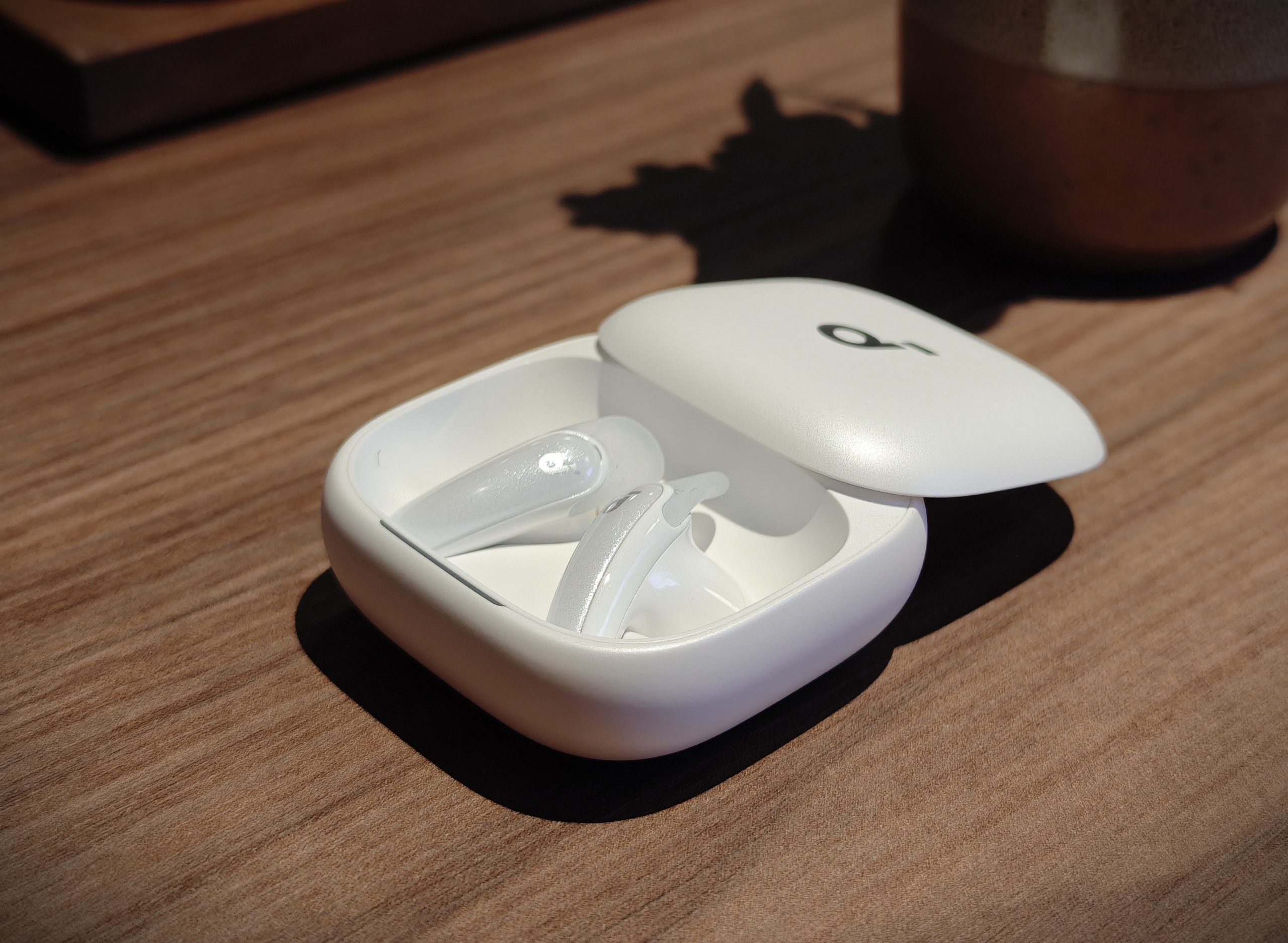
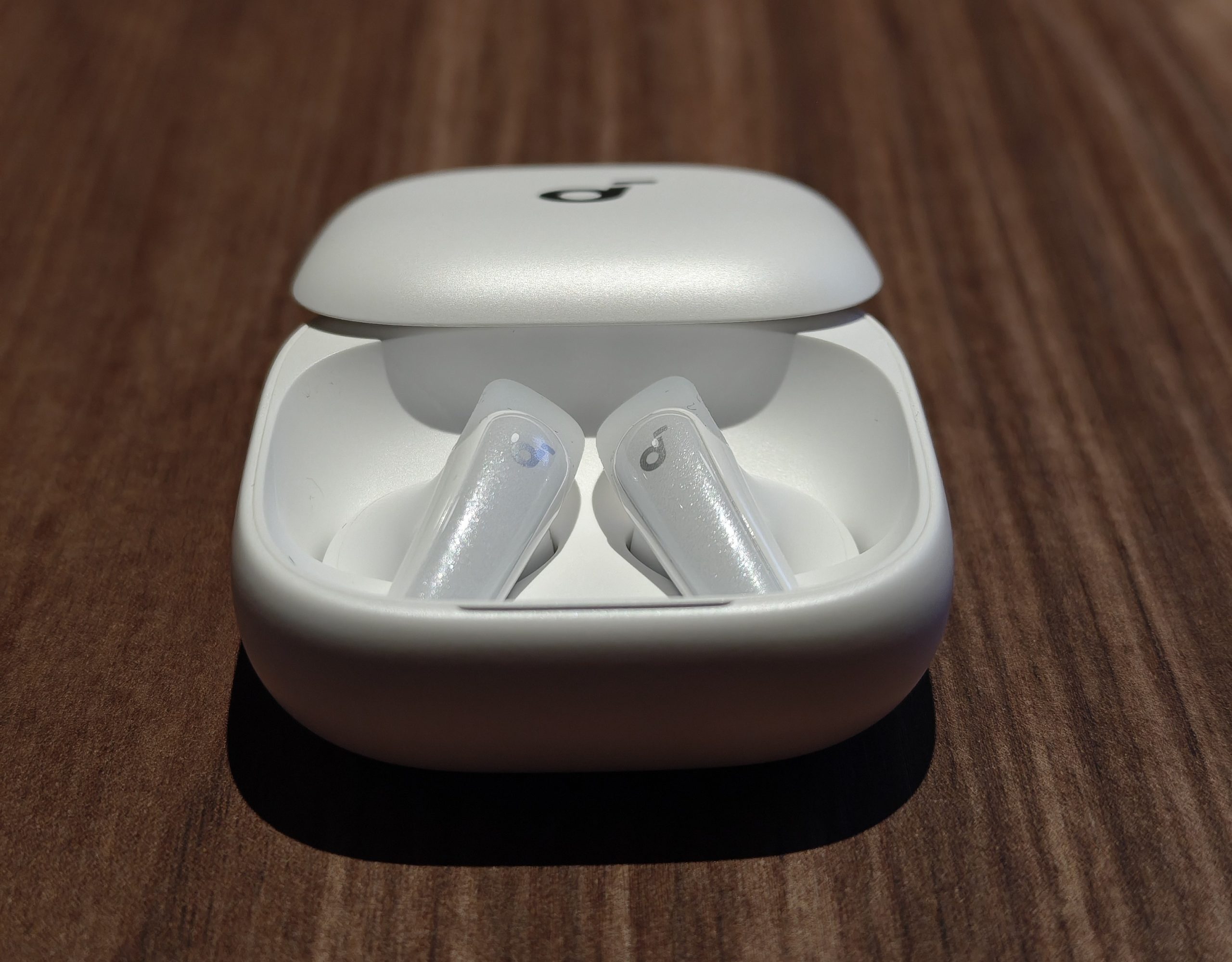
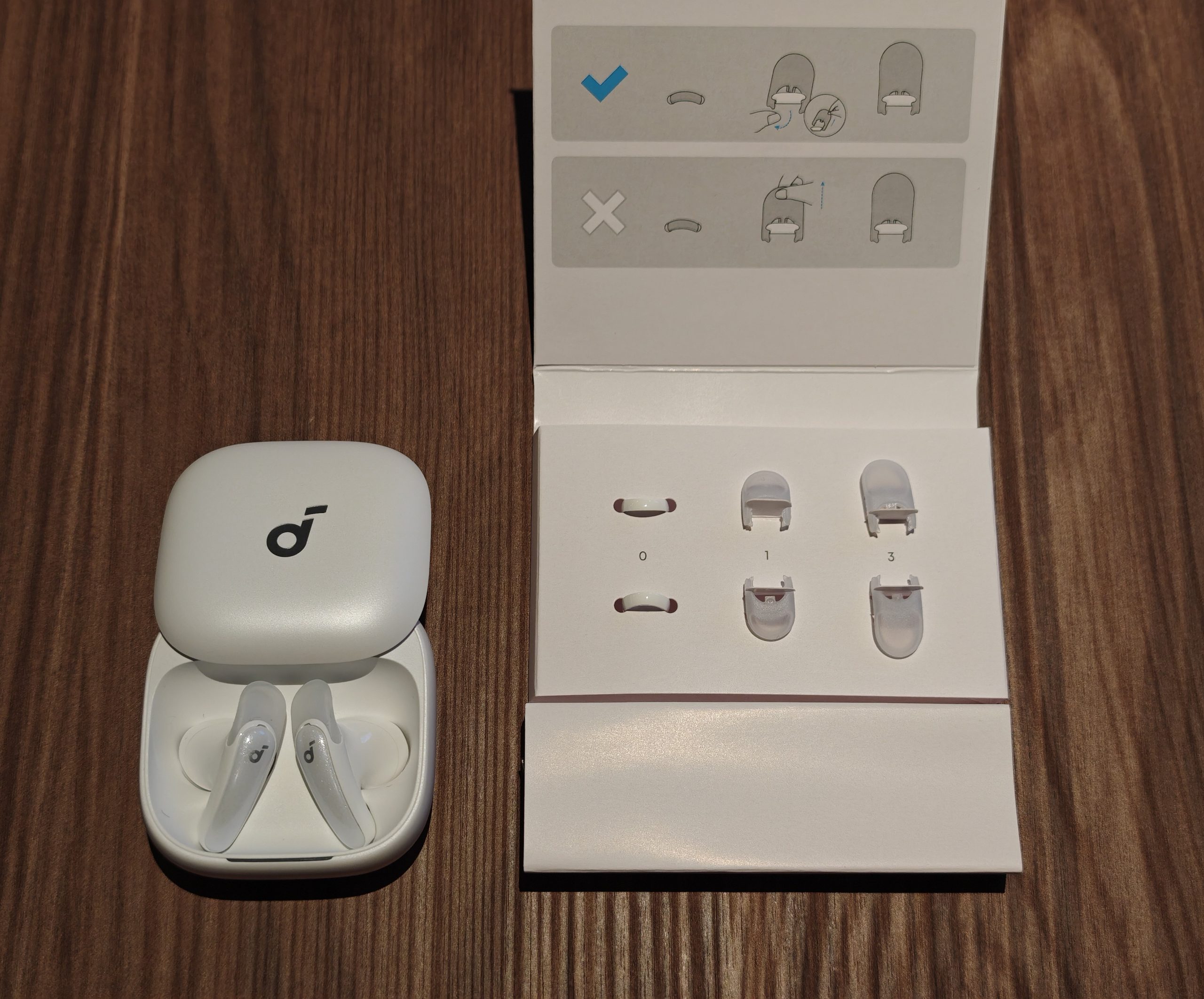
Beyond the naming convention, the design approach of the Liberty Buds marks a departure from previous Liberty models. While prior iterations utilized an in-ear format with silicone tips for secure fit, the Liberty Buds adopt a design akin to Apple AirPods, featuring a hard plastic earbud shell without tips. This ‘resting’ fit, characteristic of some open-fit designs, has occasionally been perceived as less secure by users. Soundcore appears to have addressed this potential concern by integrating a stabilizing wing atop the earbud, enhancing its retention within the ear. This wing is provided in three distinct sizes, alongside a half-ring option that allows for its complete removal. In practice, the wing proves effective, not only maintaining the earbud’s position but also facilitating optimal alignment in the ear canal.
(Photo: senses.se)
The charging case for the Liberty Buds bears a strong resemblance to those of many previous Soundcore models. It shares a common design characteristic: its lightweight and symmetrical form factor can make it challenging to intuitively determine the correct orientation for sliding the lid open.
Bluetooth 6.1
The Soundcore Liberty Buds are notable for potentially being the first headphones we have reviewed to feature Bluetooth 6.1. Therefore, it is pertinent to briefly outline the advancements introduced by this latest version.
Bluetooth 5.0, introduced in 2016, marked a significant leap, enhancing speed and range. Subsequent versions have addressed specific challenges, building upon prior advancements and incorporating new discoveries. For instance, version 5.2 enabled LE Audio (Low Energy Audio), which, in essence, delivers comparable or superior audio quality with reduced bandwidth, thereby conserving battery life. Progressing to September 2024, the release of version 6.0 introduced a key feature: Channel Sounding. This technology allows devices to measure their relative distance with centimeter-level precision, facilitating applications such as automatic vehicle unlocking when a user is within a specified proximity. Notably, all these capabilities leverage Bluetooth Low Energy, the same standard as LE Audio.
Bluetooth 6.1, launched in May 2025, primarily focuses on enhanced security and improved energy efficiency. Its implementation of Random Private Addresses (RPA) significantly mitigates user tracking; with version 6.1, these addresses dynamically randomize every 8 to 15 minutes, a departure from the static quarter-hourly changes of previous iterations. Furthermore, address changes are now executed directly within the Bluetooth chip, bypassing the host device, which further optimizes battery consumption on connected peripherals like earbuds or smartwatches.
Consequently, while Bluetooth 6.1 does not directly impact audio quality, it substantially enhances system energy efficiency and privacy through improved anti-tracking measures.

(Photo: senses.se)
Adaptive ANC 3.0
Initially, the absence of silicone tips raised concerns regarding the suppression of intrusive ambient noise. However, the noise cancellation proved remarkably effective. The earbuds require a brief period to analyze environmental sounds before engaging their blocking capabilities. Sudden, transient noises tend to bypass the adaptive noise cancellation, which struggles to react instantly, and high-frequency sounds often persist. A drawback of the adaptive noise cancellation is its continuous operation and environmental adjustment. While stable in a consistently noisy environment, it actively processes dynamic soundscapes, which can subtly detract from the overall sound experience. It necessitates a brief waiting period for the system to fully stabilize and for the user to confirm proper earbud seating; until then, the auditory presentation can feel disorienting and uneven. Similarly, deactivating noise cancellation initiates a gradual audio fade-in, requiring a few seconds for the full sound profile to materialize.
Moreover, the noise cancellation is notably potent, to the extent that it can induce the characteristic sensation of ear pressure over prolonged use. Regrettably, unlike some preceding models or competing products, there is no option to adjust the intensity of the noise cancellation; it operates solely at full capacity or is entirely disengaged.
Real-Time Translation with SoundCore’s AI Anka
At the time of this review, the Liberty Buds offered three distinct translation functionalities: Real-Time Translation, Face-to-Face Translation, and Contextual Learning. A fourth variant is indicated as forthcoming, though its specific nature and release timeline remain undisclosed.
Real-Time Translation
This feature enables users to passively monitor conversations in various languages. Our testing included English, French, German, Persian, and a limited scope of Chinese. Spoken content is transcribed within the accompanying application, and the translated audio is relayed through the headphones. Supporting over one hundred languages, the system is designed to automatically identify the spoken language, though its accuracy in this regard exhibits some variability. However, when the source language is manually specified, its performance is highly effective. Challenges naturally emerge with fragmented sentences or the use of colloquialisms. Observing the transcription in the app allows users to identify inaccuracies. While not entirely flawless, Soundcore has a history of introducing innovative features that often require further refinement. Previous examples include the Sleep A20’s AI-generated soundscapes, which necessitated phone activation, or the Liberty 4’s in-ear heart rate monitoring, which occasionally displayed synchronization issues. For illustrative purposes, we have included two translation examples below: one from Sveriges Radio Ekot and another from the opening scene of the 2006 film Casino Royal, allowing readers to assess the translation accuracy.


Face-to-Face Translation
This function offers direct, on-demand translation. Users speak a sentence, which the app then translates and vocalizes. A key distinction is that all spoken content is played through the smartphone’s speaker, rather than the headphones, ensuring the other party is fully engaged in the exchange.
Contextual Learning
This feature comprises a curated library of common phrases, organized by subject area. Illustrative examples include Can I get the bill, Where is the nearest subway?, or Can you recommend a dish? Essentially, it digitalizes the content traditionally found in physical phrasebooks. While the concept itself is not novel, its integration and immediate accessibility within the Liberty Buds ecosystem offer practical convenience.
Having explored some of the Liberty Buds’ more distinctive features, we now turn to the critical aspect of audio performance. The question is, how do they sound?
The Sound Profile – Anker SoundCore Liberty Buds
The 11mm dynamic drivers deliver a powerful, albeit somewhat accentuated, sound profile. Bass frequencies are notably prominent, contributing to an impactful presentation that, while effective, deviates from a neutral response and can become fatiguing during extended listening sessions. This characteristic mirrors our experience with the Beyerdynamic Amiron 100, where the auditory experience offered relentless intensity. Our initial assessments utilized the default Soundcore Signature EQ mode with our standard test playlist, yielding a respectable audio performance. However, direct comparisons with headphones such as the Beyerdynamic Amiron 300 or Technics EAH-AZ80 reveal distinct differences. While the Technics occupies a higher price bracket and the Amiron 300 is similarly priced, these comparisons highlight the areas where the Liberty Buds fall short: specifically, in detail retrieval, soundstage breadth, and dynamic range, where they do not achieve peak performance.
Nevertheless, the Liberty Buds demonstrate competent frequency separation and deliver impactful transients where appropriate. Listening to Hans Zimmer – Buyer Beware proves engaging, despite the prominent sub-bass that can feel somewhat overwhelming. Conversely, more nuanced tracks such as Apparat – Goodbye tend to sound somewhat subdued, as the headphones do not fully articulate subtleties when peak intensity is absent. However, with tracks like Trevor Guthrie – This Is What It Feels Like, the Soundcore Liberty Buds exhibit strong performance.

(Photo: senses.se)
Conclusion – Anker Soundcore Liberty Buds
The design philosophy of the Liberty Buds involves a delicate balance between audio fidelity and the integration of a wide array of technical features. In contrast, headphones such as the Technics EAH-AZ100 prioritize sound quality, which is reflected in their acoustic performance (and Technics’ unique three-point connectivity). The Liberty Buds, however, incorporate an extensive suite of functionalities not primarily centered on audio reproduction, positioning them more as a versatile utility device than a dedicated source of high-fidelity sound.
Understanding this distinction is crucial for appreciating the Liberty Buds within their intended context. Priced at 1,700 kronor, they do not fall into the entry-level segment, nor do they represent the pinnacle of audio performance. Nonetheless, they offer a compelling package that includes innovative translation tools, the most current Bluetooth standard, sophisticated noise cancellation, and a commendable sound profile. Therefore, for users whose primary criterion is sound quality, these may not be the optimal selection. However, for those prioritizing a comprehensive set of advanced features, the Liberty Buds warrant significant consideration. We find the 1,700 kronor price point somewhat elevated, given the limitations identified during our evaluation. While certain technical functionalities are impressive, the cumulative user experience does not fully justify the premium.
Soundcore provided the review samples for this evaluation. It is our editorial policy that product providers exert no influence over our testing processes; our reviews are conducted independently, with a steadfast focus on serving our readership and consumers.
