
TL;DR
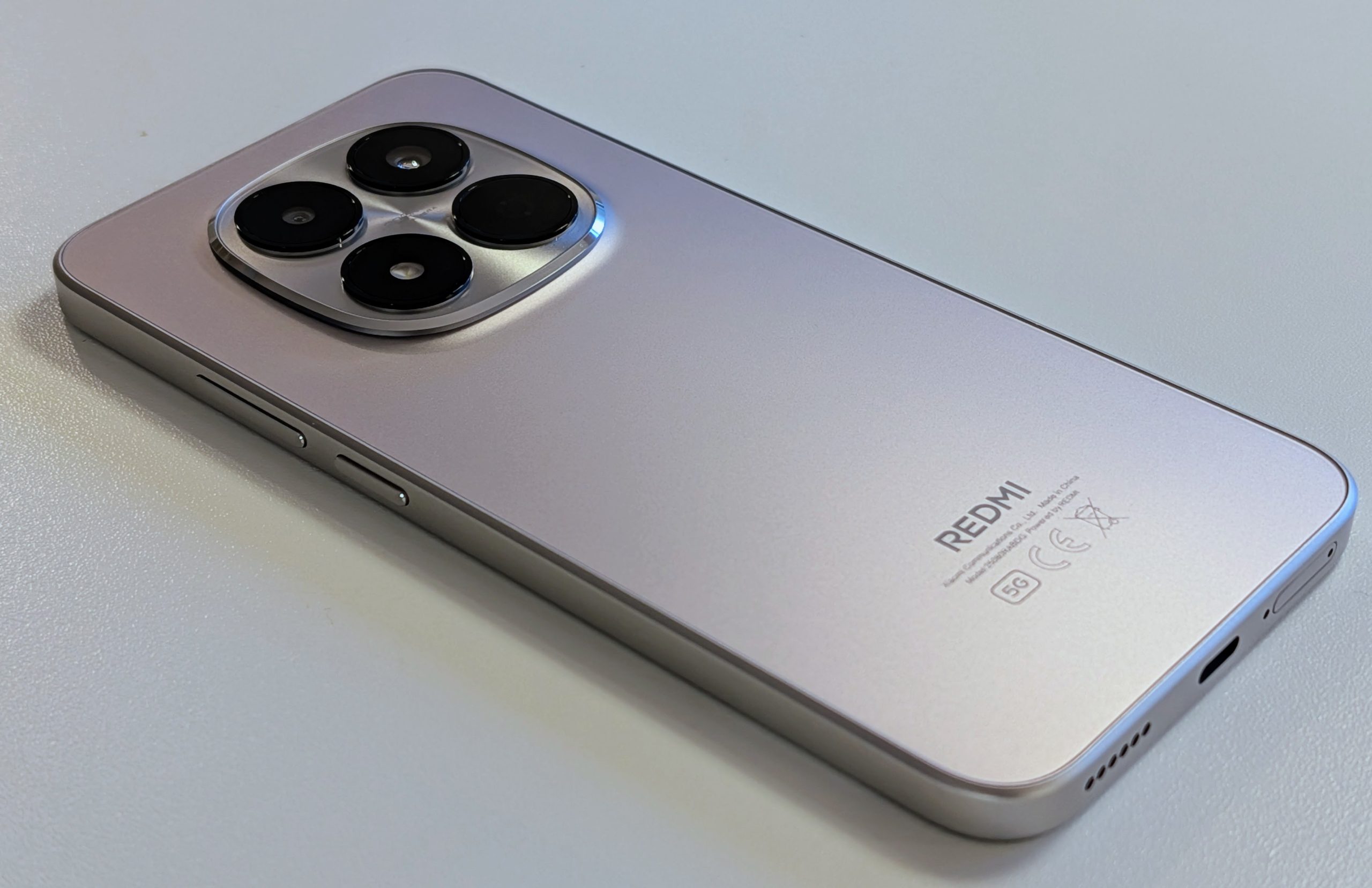
The Redmi Note 15 Pro 5G is a solid contender, sharing an amazing display and durable build with its Pro+ sibling. It boasts slightly better battery life and a main camera that's almost as good, plus a preferred flat screen design. While it uses a slightly less powerful chip and slower charging, these trade-offs significantly lower the price, making it a smart buy for most users who don't need the absolute fastest charging or top-tier gaming performance. Curious to see if it's the right fit for you? Dive into the full review!
We recently reviewed the Redmi Note 15 Pro+ and found it to be a commendable device. This review now focuses on its sibling, the Redmi Note 15 Pro 5G. Given the significant similarities between these models, particularly on paper, our analysis will highlight their key differentiators. For a comprehensive overview, we recommend consulting our review of the Pro+ prior to this one.
Does the Redmi Note 15 Pro 5G represent a shrewd purchase, offering comparable performance at a more accessible price point, or has Xiaomi made compromises that detract from the user experience? We investigate these aspects in our detailed assessment.
Design and Build Quality
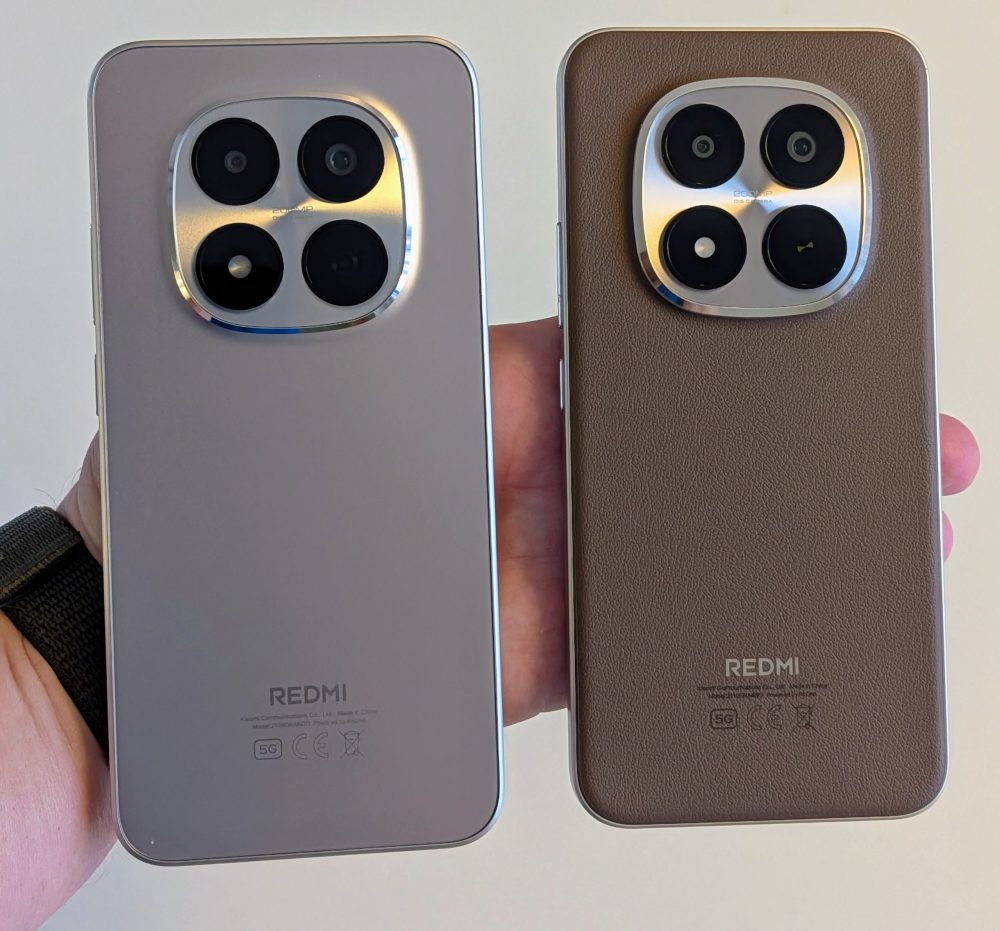
A side-by-side comparison of the devices reveals immediate distinctions in their construction. The Pro+ (in Mocha Brown) incorporates a tactile fiberglass back with a leather-like texture, whereas the Pro 5G utilizes a more conventional polished plastic finish. While the latter maintains a sleek and robust build, its in-hand feel is less secure than that of the Pro+. We strongly advise using a protective case for the Pro 5G, conveniently included in the retail packaging.
Both models feature the same Gorilla Glass Victus 2 for front panel protection and share an identical IP66/IP68 ingress protection rating with the Pro+. Furthermore, the robust Redmi Titan Structure is consistently applied across both devices. Consequently, their inherent durability is equivalent; the primary distinction lies in the tactile material experience.
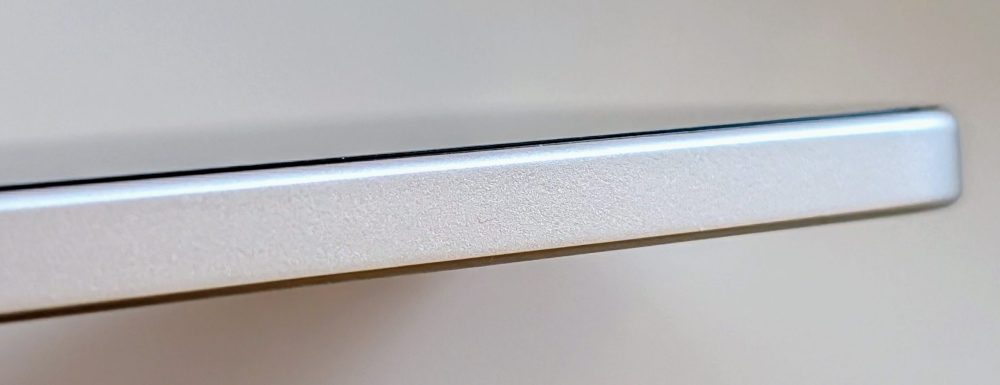
A notable design choice we appreciate, however, is the completely flat display panel. In contrast, the Pro+ features a subtly curved screen; while aesthetically pleasing, we find a flat panel preferable. This design facilitates easier application of screen protectors and mitigates undesirable reflections along the edges. Consistent with the Pro+, a screen protector is pre-applied at the factory.
Display
The display specifications are virtually identical to those of the Pro+. Both models feature a 6.83-inch AMOLED panel, offering 1.5K resolution (2772 x 1280 pixels), a 120 Hz refresh rate, and a peak brightness of 3,200 nits. Furthermore, they share support for HDR10+, Dolby Vision, and a 12-bit color depth. This constitutes an exceptional panel, with no discernible visual differences between the two devices.
Wet Touch 2.0 technology is also integrated, ensuring the screen maintains responsiveness even with wet fingers. This remains one of the most competitive displays available within its price segment.
Performance and Software
The Pro 5G utilizes a MediaTek Dimensity 7400-Ultra processor, in contrast to the Pro+’s Snapdragon 7s Gen 4. This 4nm chip delivers proficient performance for daily tasks. Applications launch promptly, the interface operates fluidly, and users are unlikely to perceive a significant difference from a more premium processor in typical usage. While synthetic benchmarks indicate approximately 15% lower performance, real-world activities such as social media interaction, web browsing, or video playback show virtually no discernible difference compared to the Pro+.
Consistent with the Pro+, the device incorporates UFS 2.2 storage. However, we note this choice as somewhat underwhelming given the current market. Consequently, handling larger files may exhibit slower transfer speeds than typically expected for this price segment.
The software experience mirrors that of the Pro+, featuring HyperOS based on Android 15. While the interface is sleek and responsive, the presence of bloatware and intrusive advertisements persists. For a detailed discussion on this aspect, we direct readers to our review of the Pro+; in summary, this remains a significant point of frustration.
The update policy is consistent across both devices: four OS updates and six years of security updates. While this is an acceptable commitment for a smartphone in this price bracket, it is noteworthy that the device ships with Android 15 despite Android 16 having been released some time ago. This effectively limits its major OS updates to three.
Battery and Charging
This section reveals a notable difference: the Pro 5G incorporates a marginally larger battery than the Pro+, featuring a 6,580 mAh capacity (compared to 6,500 mAh in the Pro+). This results in excellent battery endurance. Coupled with the slightly more power-efficient processor, the device achieves exceptional battery life. Under typical (moderately heavy) usage conditions, we consistently observed nearly two days of operation.
Regarding charging capabilities, Xiaomi has implemented a cost-saving measure, limiting the Pro 5G to 45W charging, a reduction from the Pro+’s 100W. This translates to a full charge duration of approximately one hour and fifteen minutes, as opposed to the Pro+’s roughly 40 minutes. Consistent with current industry trends, a power adapter is not bundled with the device. Furthermore, utilizing a standard USB-PD charger will yield approximately 27W; thus, achieving the full 45W charging speed necessitates a proprietary Xiaomi charger.
Camera
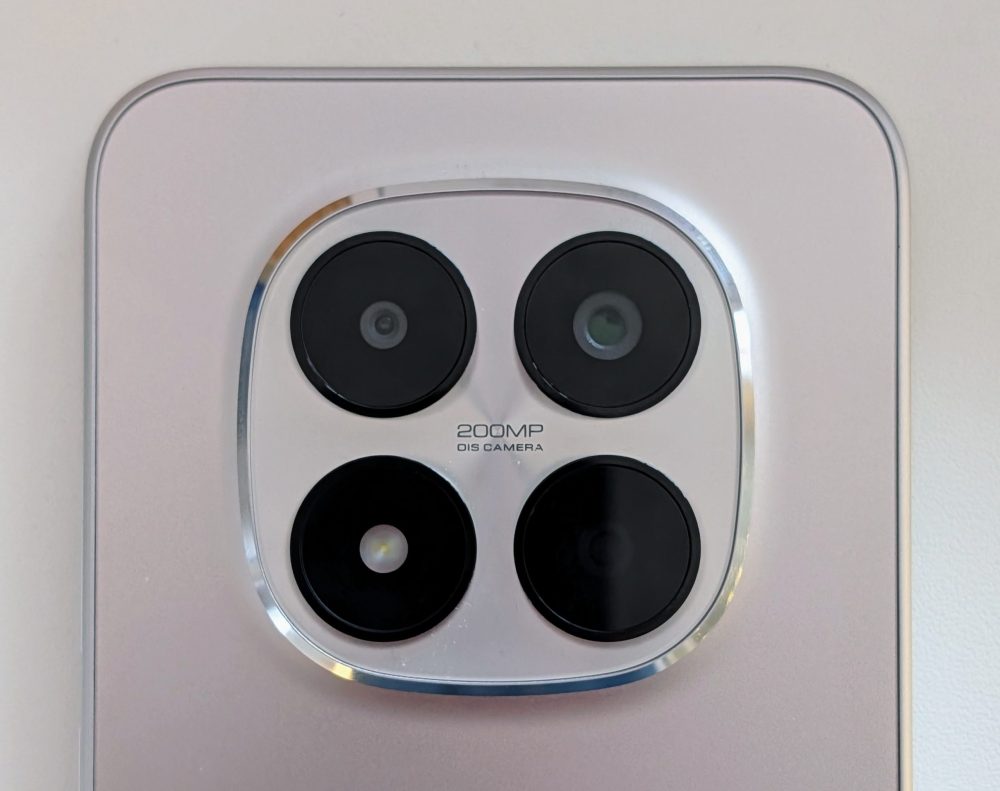
The camera configuration is largely congruent with that of the Pro+. Both models feature an identical 200 MP main camera, equipped with a substantial 1/1.4-inch sensor, Optical Image Stabilization (OIS), and an f/1.7 aperture. An 8 MP ultrawide-angle lens is also shared. Furthermore, consistent with the European version of the Pro+, a dedicated telephoto lens is absent; Xiaomi instead employs digital cropping of the high-resolution sensor to achieve 2x and 4x zoom capabilities.
Image output from the main camera closely resembles that of the Pro+. Daylight photographs exhibit commendable sharpness and accurate color reproduction, while night photography performance is entirely satisfactory.


Interestingly, the Pro 5G occasionally produces superior night photographs compared to the Pro+, demonstrating enhanced contrast and improved light capture in low-light environments. This observation is somewhat unexpected but is likely attributable to variances in the image processing algorithms employed by each processor. We identified a similar trend with the preceding generation, though in that instance, the Plus model exhibited a distinct advantage.
The front-facing camera features a 20 MP sensor, a reduction from the Pro+’s 32 MP. While its output is perfectly acceptable, the Pro+ demonstrably captures superior selfies. Consequently, this differential in front camera performance is a relevant consideration for users prioritizing self-portrait photography.
Conclusion
The Redmi Note 15 Pro 5G exhibits substantial commonalities with its more premium sibling. It features an equally impressive display, offers marginally superior battery life, and its main camera produces largely equivalent results. Furthermore, its durability, characterized by the Titan Durability framework and IP68 rating, is identical.
The premium for the Pro+, typically ranging from 700-1000 SEK, primarily accounts for 100W fast charging (versus 45W), a marginally more robust processor for intensive gaming, and an enhanced front-facing camera. Additionally, it offers a more premium in-hand feel due to its fiberglass back panel.
The critical question is whether these additional features justify the 700 SEK price differential. For the majority of users, we contend that they do not. The Pro 5G delivers an essentially equivalent daily user experience, and its flat display panel is, in our assessment, a tangible advantage. We would only recommend the Pro+ if rapid charging is a paramount priority, or if the user frequently engages in graphically demanding games. However, even in such cases, the Pro+ does not position itself as a high-performance gaming device, suggesting that more expensive models, such as the Oneplus 15, might be more suitable alternatives.
Consistent with other devices in the Redmi series, we advise users to promptly uninstall superfluous applications and disable advertisements. This action effectively mitigates the sole significant negative aspect of the user experience.
The Redmi Note 15 Pro 5G carries a recommended retail price of 5,290 SEK for the 8GB RAM / 256GB storage configuration. However, at the time of this review, it is available for purchase at 4,490 SEK.
Xiaomi supplied the review units for this assessment. The provider of the material exercised no editorial influence over our evaluations, as our reviews are consistently conducted independently with the interests of our readers and consumers as the paramount consideration.
