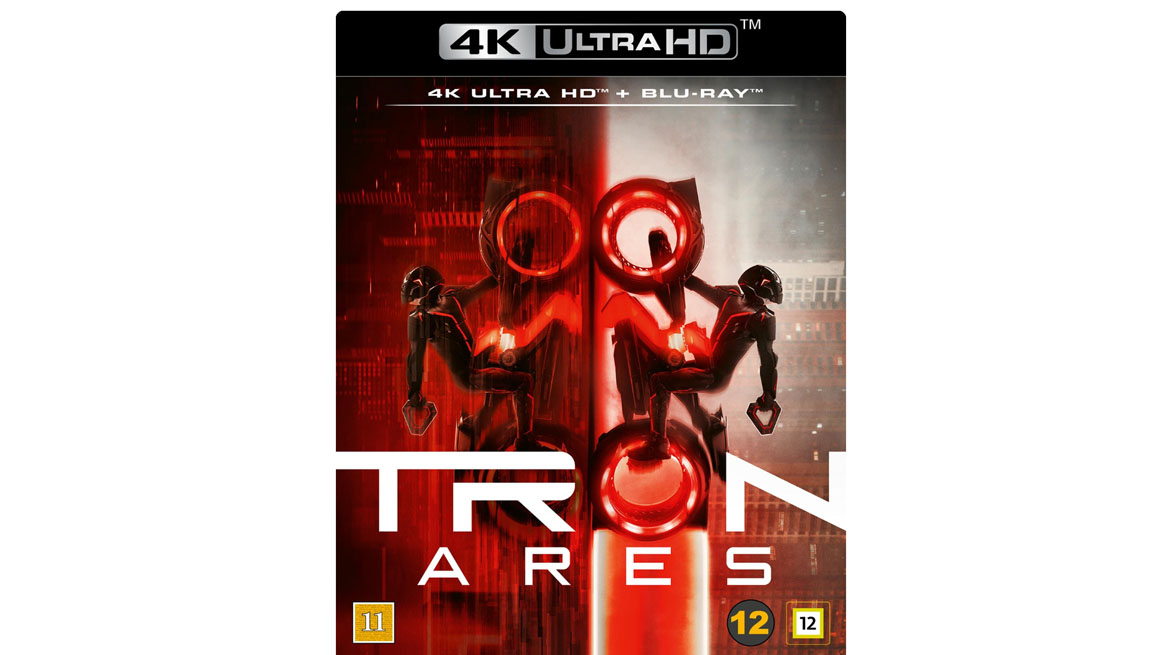

Tron: Ares is set fifteen years after the events of Tron: Legacy. Sam Flynn is no longer present, and Eve Kim (Greta Lee), alongside her sister, assumes control of the company ENCOM. Julian Dillinger (Evan Peters) continues to steer the company with a legacy of ambition mirroring his grandfather’s and is now pursuing a highly lucrative defense contract. He has successfully engineered physical manifestations of digital constructs in the real world. However, these creations are unstable, lasting no more than 29 minutes, initiating a quest for the elusive permanence code. ENCOM has successfully located it, triggering a high-stakes pursuit. Eve Kim finds herself relentlessly pursued by Ares (Jared Leto), Dillinger’s most advanced program. Yet, as Ares spends more time in the real world, he begins to discern incongruities in his mission, gradually prompting him to question his own existence.
The Original Film and Its Legacy
I have consistently held the original 1982 film in high regard, an appreciation that can pose a challenge for modern audiences unfamiliar with the remarkable craftsmanship it embodies. The digital scenes were meticulously hand-coded, and previewing required transferring the material to actual film stock, necessitating a cinema viewing to detect even a single missed pixel.
This represented an exceptionally time-consuming endeavor, a fact made even more impressive considering the film’s premiere 44 years ago. The film undeniably established foundational principles for much of the digital technology we now take for granted.
The 2010 Sequel
The initial Tron did not achieve immediate box office success upon its cinematic release but subsequently cultivated a dedicated audience. In 2010, a sequel was unexpectedly released, building upon the original narrative and introducing us to Kevin Flynn’s (Jeff Bridges) son, who inherited the central adventure.
Sixteen years have passed since my viewing of the sequel, and I recall perceiving it as adequate but nonetheless entertaining. It, too, did not achieve significant commercial success initially but has since garnered retrospective appreciation. The soundtrack by Daft Punk remains a personal favorite.
An Unexpected New Sequel
A further sequel arrived without significant prior announcement. Tron: Ares premiered in cinemas, this time predominantly set within our world. This conceptual shift presents an intriguing yet occasionally incongruous dynamic.
Several elements within the film are commendably executed. It is noteworthy that a narrative set in a digital world with digital constructs largely employs practical effects. Sets are physically constructed, and the light cycles are actual motorcycles operated by stunt riders, an approach I commend. The urban motorcycle chase sequence is particularly well-staged and visually dynamic, delivering a compelling spectacle.
From a technical standpoint, the film’s execution is exemplary: costumes, environments, and visual effects are meticulously crafted. The primary challenge lies in the audience’s emotional detachment. While Greta Lee is a capable actress, her portrayal struggles to forge the necessary connection for viewers to invest in her character’s journey. A similar observation applies to Jared Leto, whose performance never fully conveys an engaging or compelling narrative presence.
A Perfunctory Script and Questionable Narrative Choices
The screenplay is notably insubstantial and simultaneously convoluted. Plot twists and challenges unfold without significant dramatic consequence, and characters navigate the narrative arc without substantive development.
The conclusion, while visually striking, is narratively illogical. Amidst large-scale battles, vehicles move impassively through the scene, unaffected by the unfolding chaos. Fighter jets engage targets directly within an urban environment, disregarding realistic consequences or collateral damage. This illustrates the film’s conflicting nature, being both visually engaging and fundamentally illogical.
Box Office Reception and Unfulfilled Franchise Potential
Tron: Ares performed poorly at the box office, becoming one of Disney’s more substantial financial missteps in 2025. The film largely maintains the aesthetic style of its predecessors. Regrettably, it is apparent that the filmmakers anticipated a successful launch and a fourth installment, as the end credits offer a tantalizing glimpse of potential future developments that are now unlikely to materialize. However, previous franchise continuations have defied expectations.
The UHD Release: A Technical Triumph
The UHD release, however, is technically impeccable. The picture is presented in 2160p (4K) with support for both Dolby Vision and HDR10. Utilizing a BD-66 disc, it provides ample capacity for a high bitrate, a benefit particularly evident in fast-panning sequences which exhibit no discernable lag.
Colors are vibrant, black levels are pristine, and The Grid is rendered with unprecedented visual fidelity. The most striking visual sequence of the film is the urban motorcycle chase, where the full spectrum of the color palette is expertly employed.
The Sound: Powerful but Overly Aggressive
The audio mix is delivered in Dolby Atmos, and notably, I did not find it necessary to adjust the volume upwards, a common occurrence with many Disney releases. The film presents an expansive and powerful soundstage.
While the sound quality is high, I find the overall mixing somewhat fatiguing, as the film maintains a consistently high volume level throughout. This characteristic is inherent to the film’s theatrical mix and not an artifact of the home release. The sound design is robust, and the immersive directional audio, particularly in the climactic sequences, contributes significantly to the experience.
Bonus Features
The UHD disc itself does not include bonus features; however, the accompanying Blu-ray disc provides a substantial collection. For a contemporary release, there is a commendable amount of behind-the-scenes material, offering in-depth insights into various production aspects, alongside a selection of deleted scenes.
Summary
Tron: Ares falls short in terms of narrative coherence and structural integrity. However, as an explosively entertaining spectacle, it delivers effectively. Particularly on UHD, where the film’s audiovisual presentation is remarkably compelling, I would still recommend Tron: Ares. This film serves as an excellent demonstration piece for a home theater system, and for dedicated Tron enthusiasts, it features a truly memorable sequence rich with nostalgic value.
SF-Studios provided review copies for this test. Material providers have no editorial influence on our tests; we always write independently with our readers and consumers in focus.
