
TL;DR
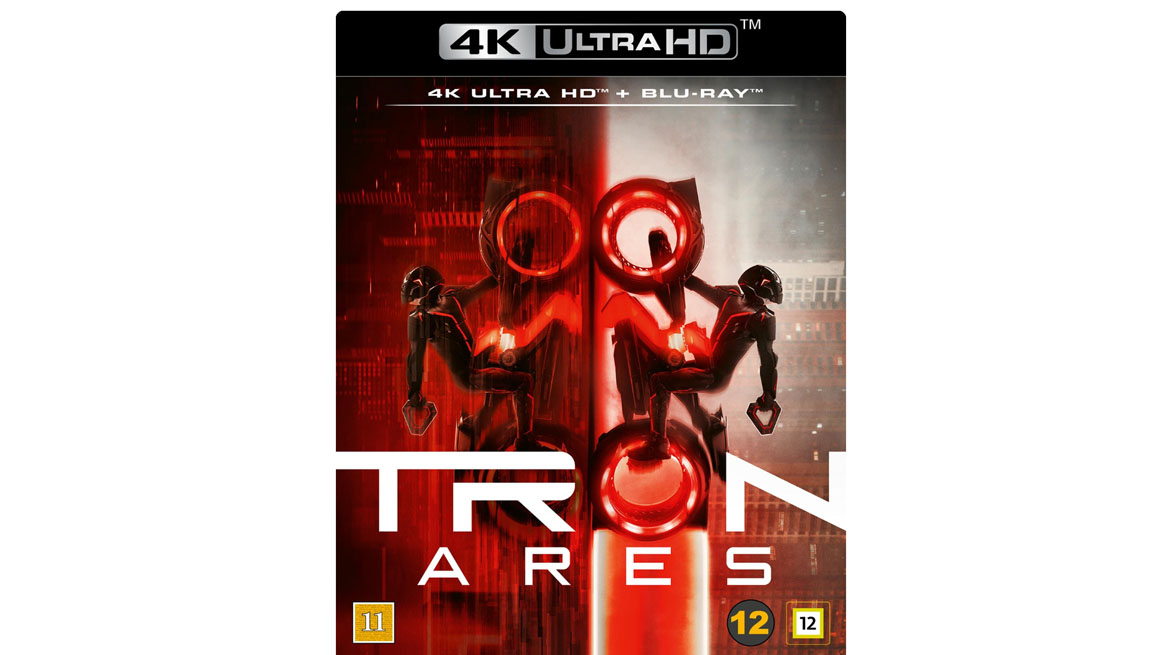
Tron: Ares drops us back into ENCOM fifteen years after *Legacy*, this time with digital creations bleeding into the real world. While boasting stunning practical effects and a visually spectacular chase, the film struggles with a thin, illogical script and uninspired performances from its leads. Despite its narrative shortcomings and commercial disappointment, Tron: Ares is a technical marvel on UHD, showcasing breathtaking visuals and immersive sound. It's a feast for the eyes and ears, making it a must-watch for high-fidelity home theater enthusiasts and die-hard Tron fans. Dive in to see if the dazzling presentation can overcome the story's flaws!
Tron: Ares unfolds fifteen years after the events of Tron: Legacy. With Sam Flynn no longer present, Eve Kim (Greta Lee), alongside her sister, assumes control of ENCOM. Julian Dillinger (Evan Peters) continues to manage the company with his predecessor’s ruthless ambition, now pursuing a highly lucrative deal with the defense department. He has successfully materialized digital creations into the real world. However, these creations have a critical limitation: a temporal instability preventing them from lasting beyond 29 minutes, which initiates a desperate search for the so-called permanence code. Upon ENCOM’s discovery of this code, a high-stakes pursuit ensues. Eve Kim finds herself relentlessly pursued by Ares (Jared Leto), Dillinger’s most advanced program. Yet, the more time Ares spends in the real world, the more he begins to question the ethical implications of his directives, prompting a profound introspection into his own existence.
The Original Film and Its Legacy
For many, the original 1982 film holds a significant place, though its pioneering craftsmanship might be underestimated by modern audiences. When developing the digital scenes, every element was meticulously hand-coded. To preview their work, the team had to transfer the material to film stock and view it in a cinema setting to meticulously identify any discrepancies, down to a single pixel.
This represented an extraordinarily labor-intensive process, and considering the film premiered 44 years ago, its achievement is all the more remarkable. The film established foundational techniques that underpin much of contemporary digital filmmaking.
The 2010 Sequel
The first Tron initially struggled at the box office but garnered a significant cult following over time. In 2010, a sequel emerged, building upon the original narrative and introducing Kevin Flynn’s (Jeff Bridges) son as the new protagonist.
Reflecting on the 2010 sequel, it delivered a moderately engaging yet ultimately satisfying experience. While not a substantial commercial triumph, it also cultivated a dedicated fanbase over time. Its acclaimed soundtrack by Daft Punk remains a notable highlight.
A New, Unexpected Sequel
Following a period without significant pre-release fanfare, Tron: Ares premiered in cinemas. This installment primarily takes place in our world, a narrative choice that is both creatively intriguing and at times narratively perplexing.
The film demonstrates several commendable aspects. Notably, a significant portion of the production, despite its digital premise, leverages practical effects. Environments are physically constructed, and the iconic light cycles are actual vehicles operated by stunt performers—a refreshing commitment to practical filmmaking. This commitment extends to the expertly choreographed motorcycle chase through the city, which is visually spectacular and leaves a lasting impression.
Technically, the film excels; costumes, environments, and visual effects are meticulously crafted. However, these technical merits struggle to compensate for a perceived lack of audience engagement. While Greta Lee delivers a competent performance, her portrayal lacks the compelling depth necessary to fully connect viewers with her character’s arc. Similarly, Jared Leto’s performance as Ares fails to imbue his character’s narrative with the desired sense of intrigue or enjoyment.
A Thin Script and Questionable Decisions
The script is perceptibly underdeveloped and, at times, convoluted. Plot developments and obstacles often resolve without significant consequence, leaving the characters largely unimpacted by their experiences.
The ending is stylish but absurdly executed. Amidst epic battles, vehicles traverse the scene seemingly oblivious to the unfolding chaos. Similarly, fighter jets engage targets within a dense urban environment with a disregard for plausible collateral damage or realism. This juxtaposition exemplifies the film’s conflicting nature, being simultaneously entertaining and notably illogical.
Reception and Dashing Future Plans
Tron: Ares faced significant commercial disappointment at the box office, marking it as one of Disney’s more costly ventures in 2025. The film maintains roughly the same stylistic approach as previous installments. Evidently, the filmmakers had aspirations for a commercial success and a potential fourth installment, as evidenced by a post-credits scene hinting at future developments. Whether this narrative thread will ever be revisited remains uncertain, though precedents exist for delayed continuations.
The UHD Release: A Technical Benchmark
The UHD release, however, is exemplary. The picture is presented in 2160p (4K) with support for both Dolby Vision and HDR10. Utilizing a BD-66 disc provides ample space for a high bitrate, which is particularly evident during rapid camera movements, where motion fluidity is impeccably maintained.
Color rendition is exquisite, and black levels are profoundly deep, presenting The Grid with unprecedented fidelity. The motorcycle chase through the city stands out as a visual highlight, showcasing the full spectrum of the film’s vibrant color palette.
The Sound: Powerful but Somewhat Fatiguing
The audio is delivered in Dolby Atmos, and this time the output does not suffer from the common issue of low default volume sometimes observed with Disney releases. The film delivers an expansive and dynamic soundscape.
Despite the high quality of the sound, the overall mix can be somewhat fatiguing, maintaining a consistently high volume level throughout the film. This characteristic appears to be inherent to the film’s original theatrical mix, rather than an artifact of the home release. The sound design is well-crafted, and especially towards the end, the immersive directional effects provide an engaging auditory experience.
Bonus Features
The UHD disc itself contains no bonus features, but the included Blu-ray disc does. For a contemporary release, the accompanying Blu-ray offers a commendable selection of behind-the-scenes material, providing in-depth insights into various production facets. Deleted scenes are also included.
Summary
Tron: Ares presents notable shortcomings, particularly regarding its narrative and structural coherence. However, as an immediate, visually spectacular diversion, it holds considerable appeal. The film truly shines on UHD, where its audiovisual presentation is exceptionally impressive, leading to a recommendation for its technical merits. It serves as an excellent demonstration piece for high-fidelity home theater setups, and for dedicated Tron enthusiasts, certain sequences offer genuinely wonderful, nostalgic moments.
SF-Studios supplied review copies for evaluation. The providers of material have no editorial influence on our tests; our editorial independence is maintained at all times, with our readers and consumers as the primary focus.
