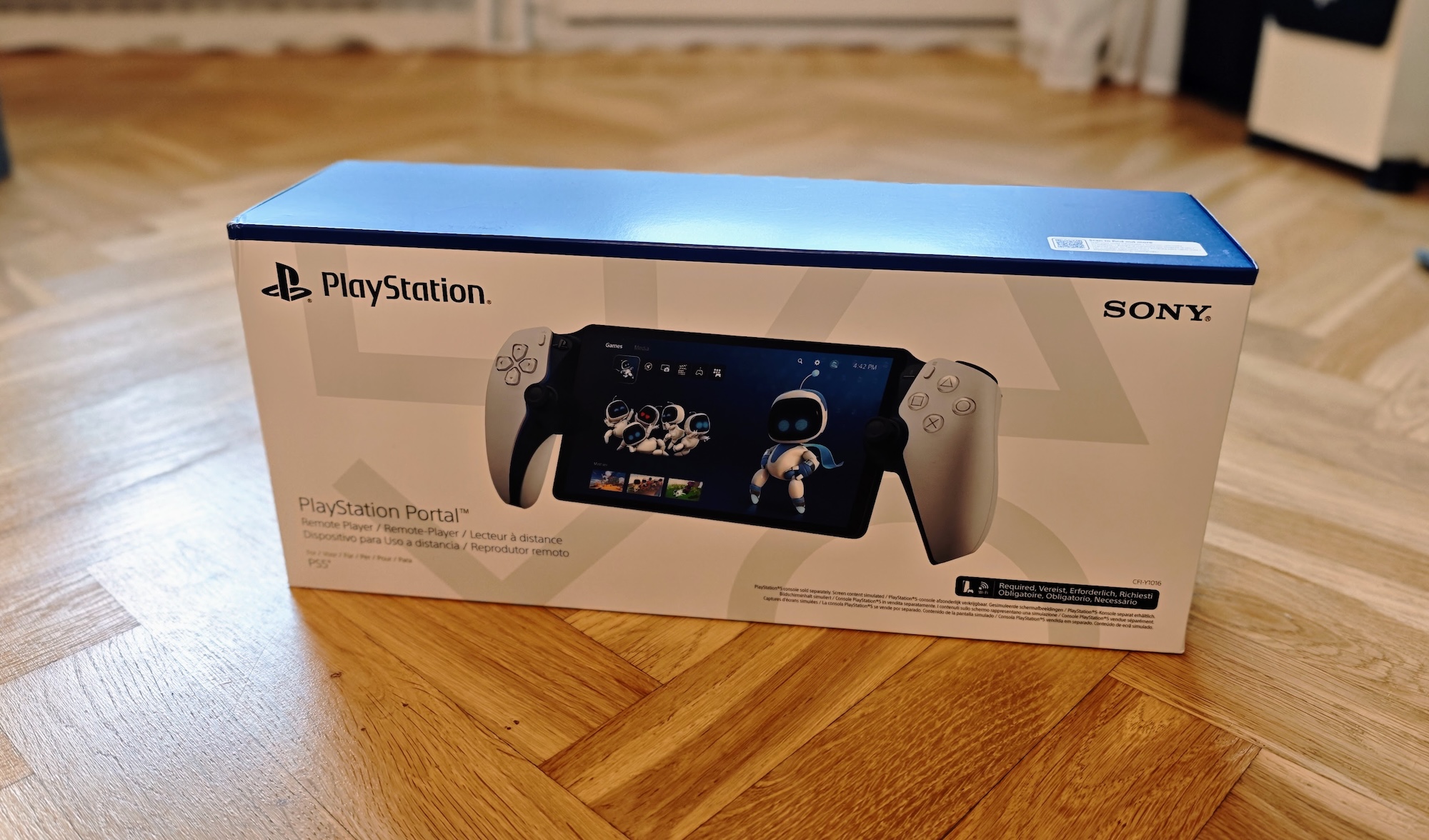

TL;DR
The PlayStation Portal, once a niche accessory, has transformed into a compelling handheld gaming device thanks to software updates. It offers an ergonomic design mirroring the DualSense controller, a crisp 8-inch screen, and has resolved earlier performance issues. Its killer feature now is cloud streaming via PlayStation Plus Premium, allowing you to play hundreds of PS5 and classic titles without even turning on your PS5. While it requires a strong Wi-Fi connection and lacks Bluetooth, it's a surprisingly versatile and affordable way to enjoy PlayStation games anywhere with internet. Ready to see if the PS Portal is your next gaming obsession? Dive into the full review to find out!
When Sony first launched the PlayStation Portal under the project name “Project Q” just over two years ago, it was met with considerable skepticism. Why invest in a screen that could only mirror your console when at home? However, by the end of 2025, software updates and cloud technology have transformed this initial “Remote Play” concept into potentially one of the most compelling handheld devices on the market. We have thoroughly evaluated the PS Portal’s current performance.
The PlayStation Portal is an interesting case study in how hardware can truly mature through software advancements. At launch, this was a pure “Remote Play” device, strictly locked to your local network and your physical PS5. Today, following the significant update that introduced standalone cloud streaming, it is a device beginning to approach its full potential, establishing itself as a legitimate contender for portable gaming.
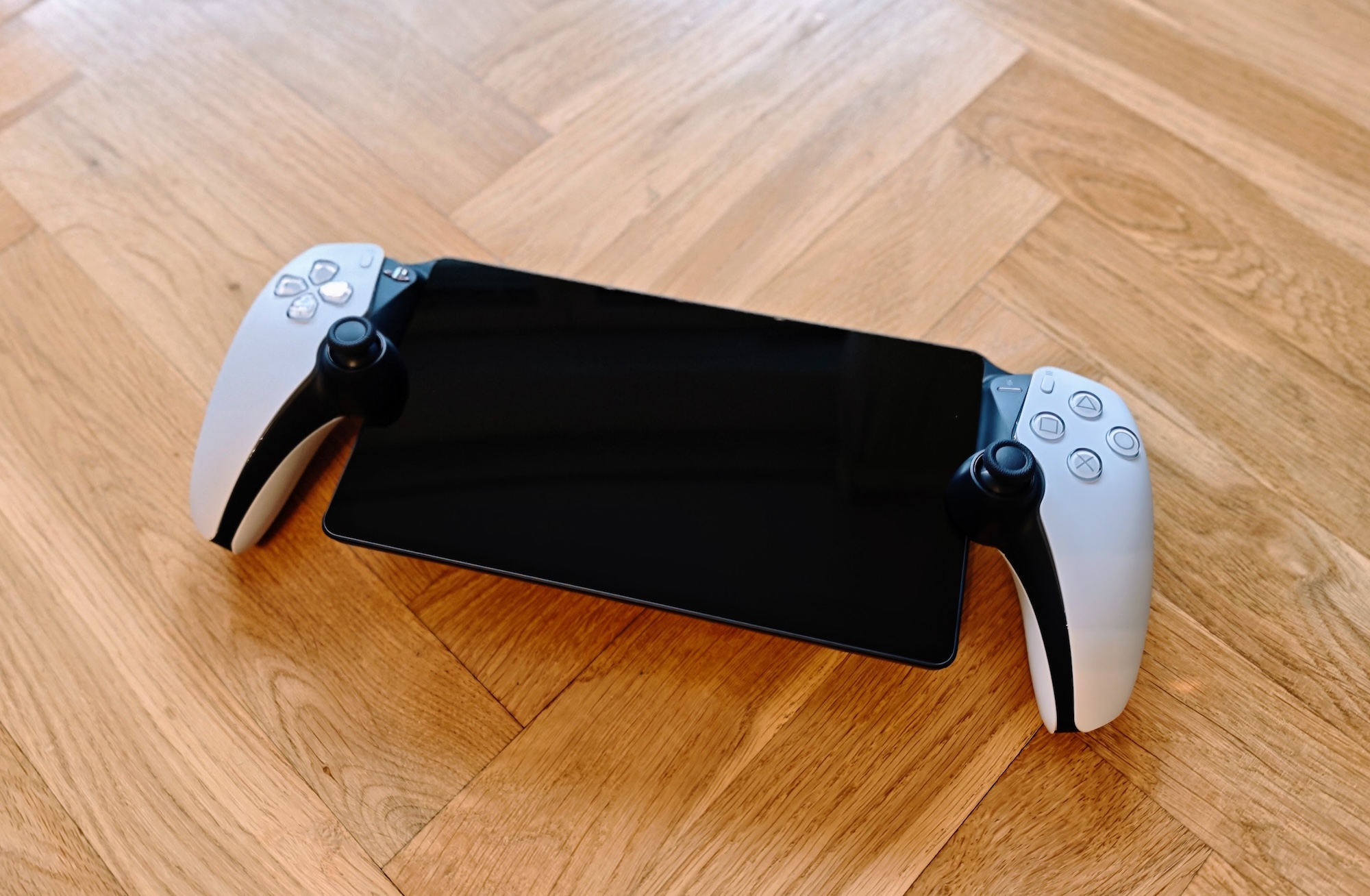
Design and Ergonomics: A DualSense in Widescreen
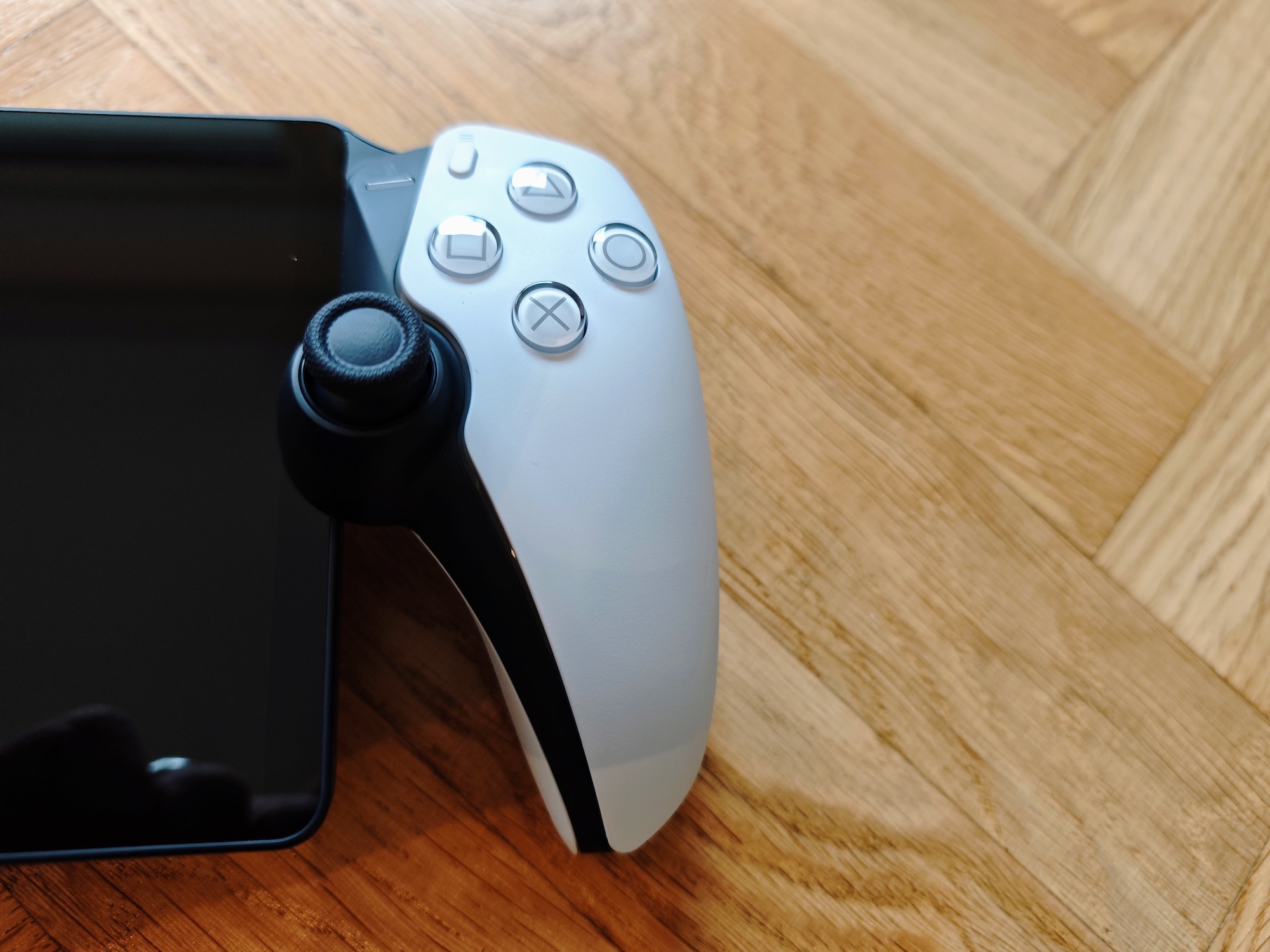
The first impression upon picking up the Portal is its exceptional ergonomic design. Sony has essentially taken the industry-leading DualSense controller, bisected it, and integrated an 8-inch LCD screen in between. The result is outstanding ergonomic comfort. Compared to the comparatively flat, rigid feel of a Nintendo Switch or the substantial weight of a Steam Deck, the Portal rests naturally in your hands.
Users benefit from all the features of the DualSense: adaptive triggers that provide resistance when drawing a bow in Horizon, and haptic feedback that allows you to feel the rain in Astro Bot. It is this tactile immersion that mobile controllers like the Backbone One simply cannot replicate.
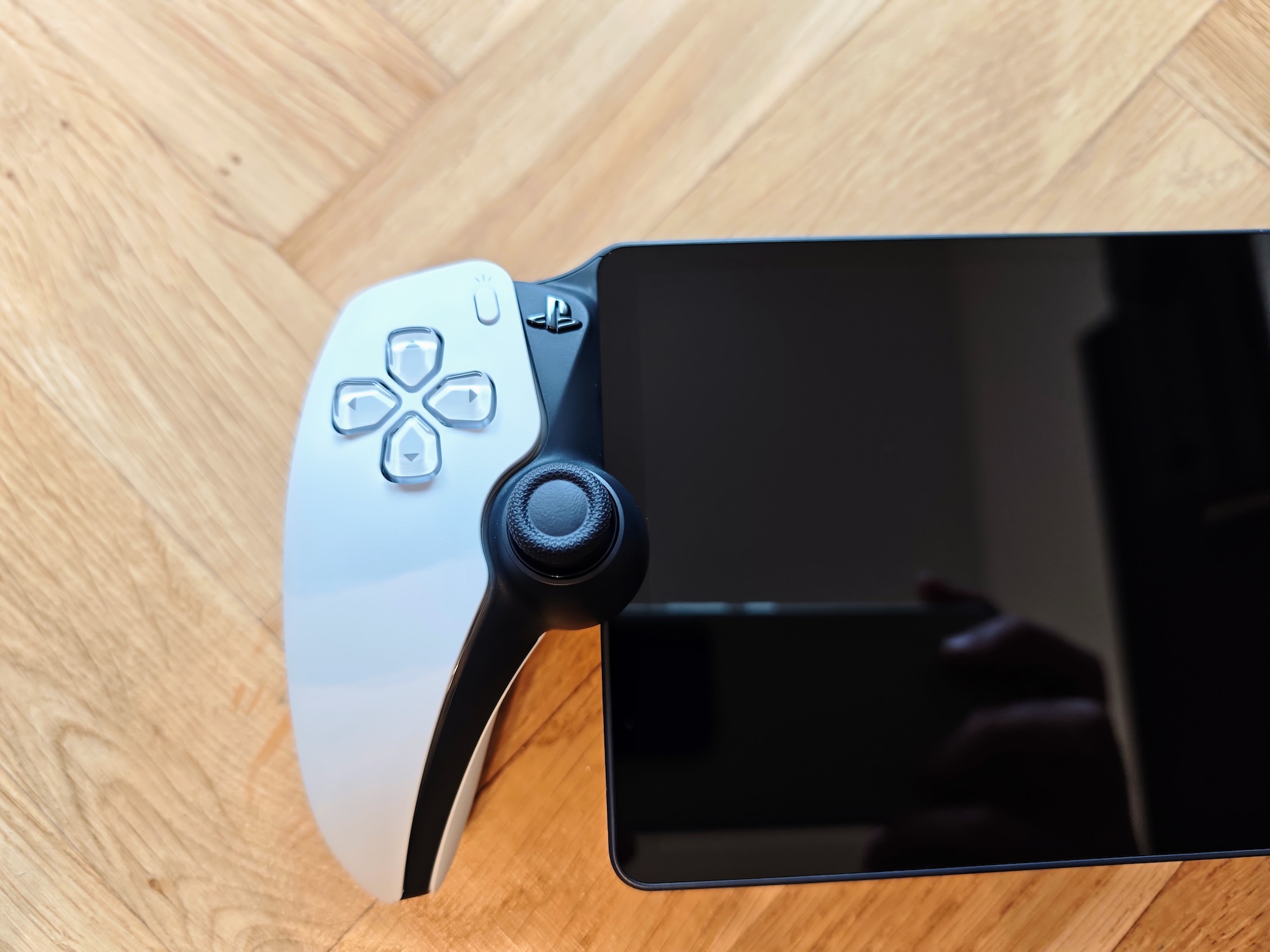
The screen is a 1080p LCD panel operating at 60Hz. While an OLED panel (as seen in the Switch OLED or Steam Deck OLED) would have offered superior contrast and true blacks, the brightness and sharpness on this 8-inch surface are impressive and likely represent a strategic compromise to maintain an accessible price point. With a pixel density of 275 PPI, games frequently exhibit greater visual fidelity here than on many entry-level 4K televisions.
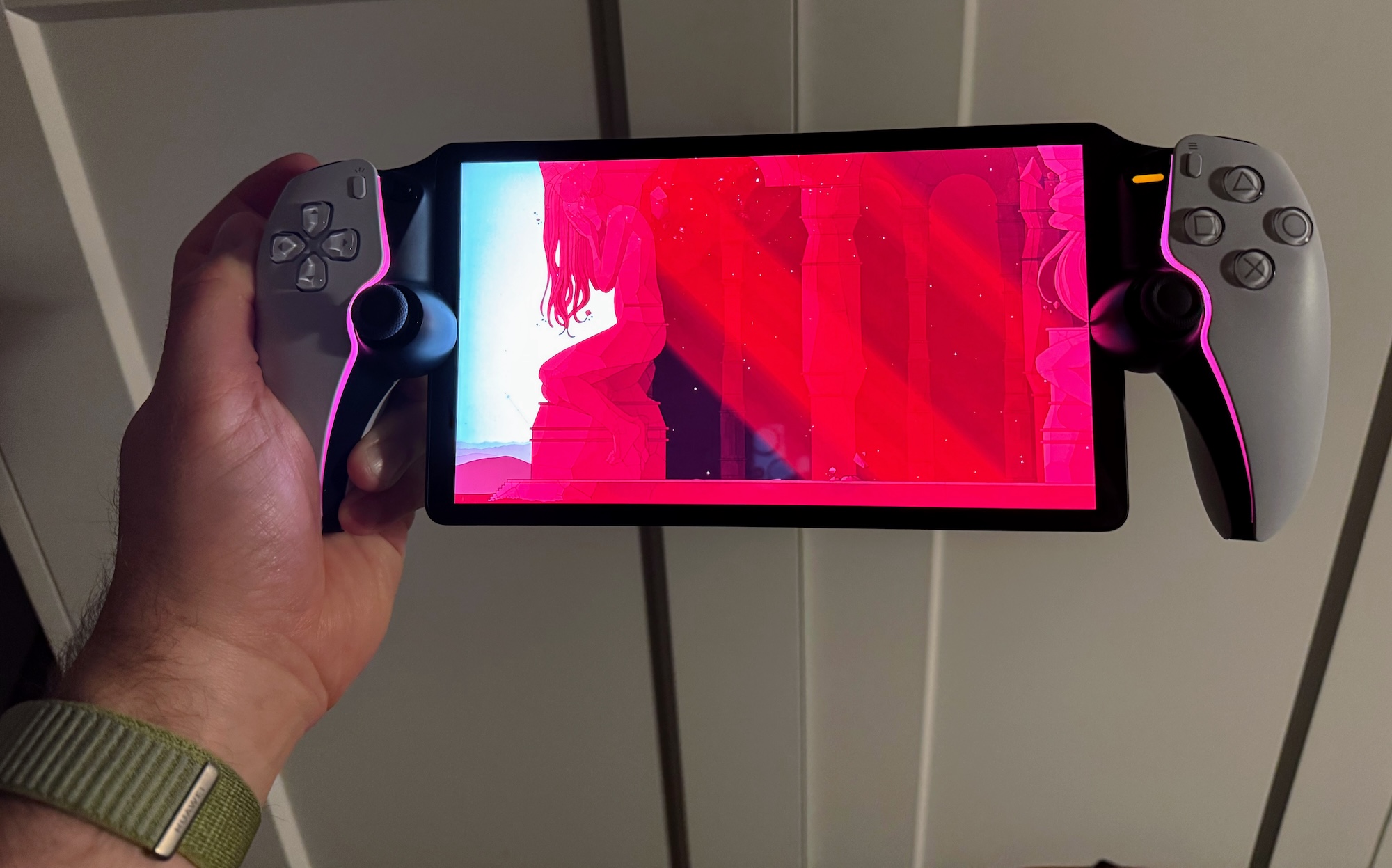
Performance: The Resolution of Micro-stutter
One of the most debated technical issues surrounding the Portal at launch was the infamous “micro-stutter” problem, caused by an unfortunate synchronization mismatch between the PS5’s output (59.94Hz) and the Portal’s screen (60Hz). We are pleased to report that this issue, thanks to firmware updates over the past year, has been conclusively addressed.
The image fluidity is now remarkably smooth, contingent on sufficient network performance. This, however, remains a critical factor for many users: the Portal is highly dependent on your Wi-Fi connection. In our tests within a Swedish apartment equipped with fiber internet (100/100 Mbit) and a Wi-Fi 6 router, it delivered excellent performance when streaming games from PS Plus. Latency, the time from button press to on-screen action, was often around 60-80ms total. For single-player games like God of War or Final Fantasy VII Rebirth, it was nearly imperceptible. For competitive shooters like Call of Duty? While not optimal, it remained viable for single-player campaigns.
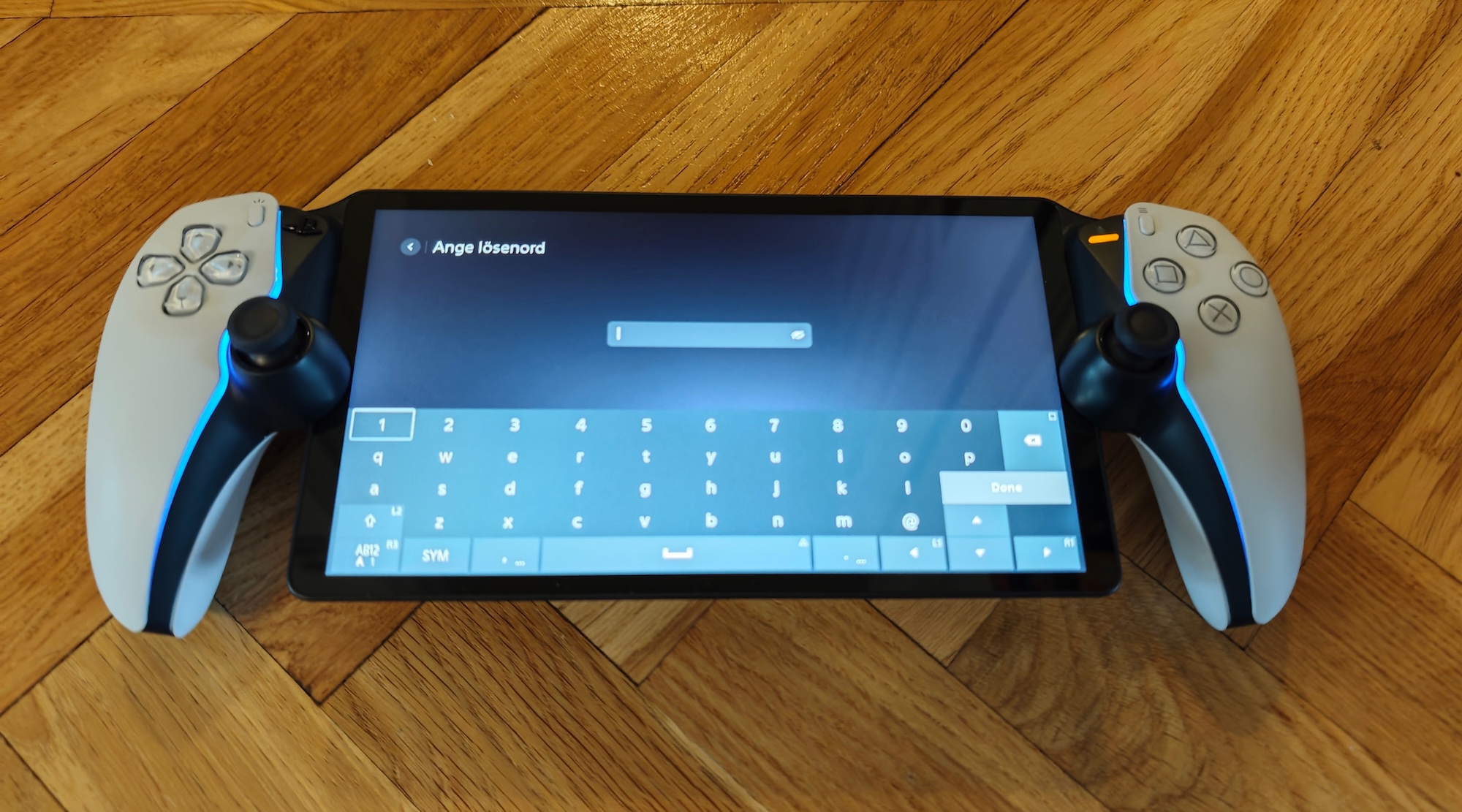
It is important to note that the Portal lacks full support for Wi-Fi 6 and 6E, which represents a missed opportunity for enhanced future-proofing. However, on the 5GHz band, the available bandwidth is usually sufficient.
Cloud Gaming: The Significant Revolution (and Strength)
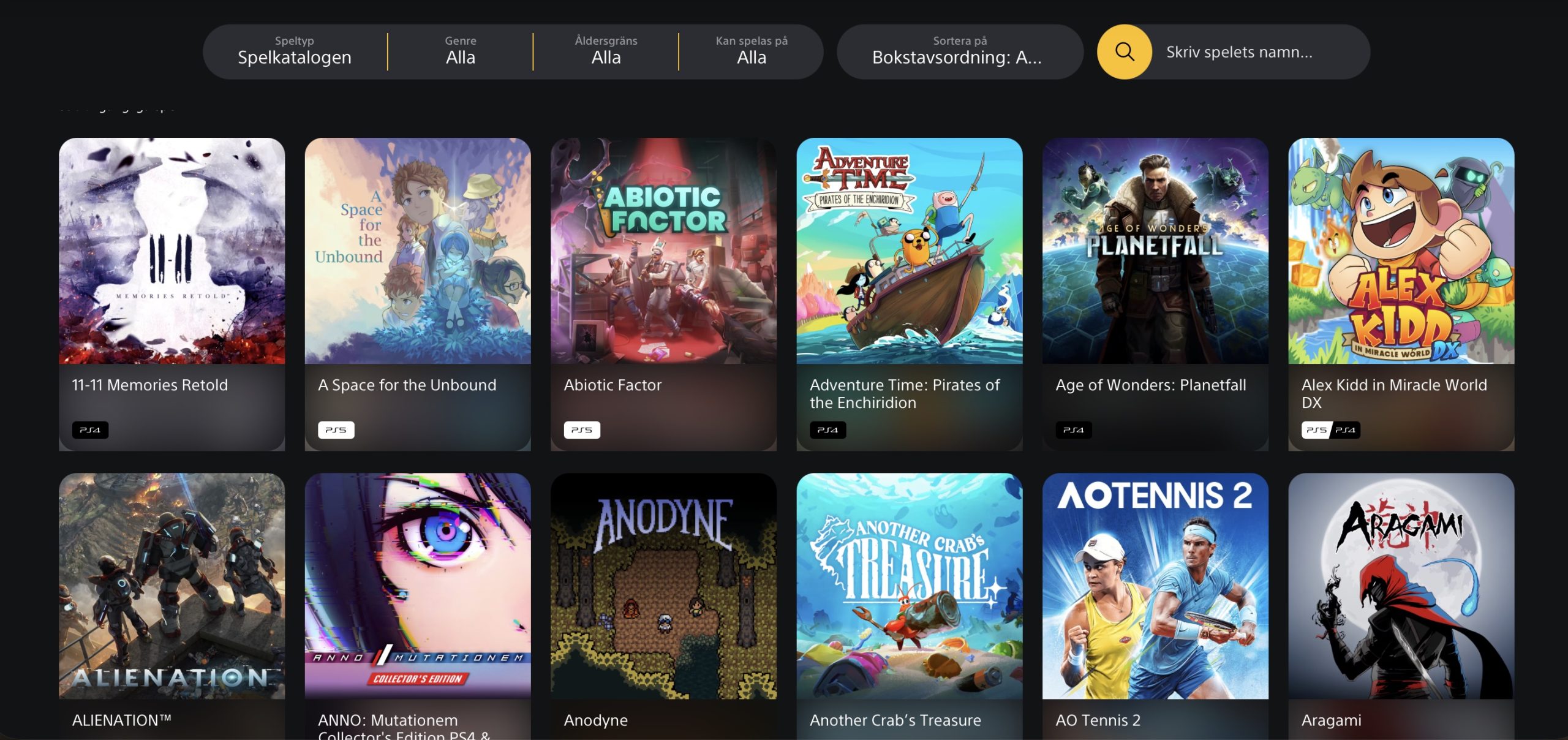
A pivotal development by the end of 2024 was the introduction of Cloud Streaming for PlayStation Plus Premium members. Previously, as mentioned, your Portal would largely be rendered inactive if your PS5 at home lost power or internet connection.
Now, users can stream approximately 300 PS5 titles and over 400 “classic” PlayStation titles directly from Sony’s servers to their Portal, without requiring the console to be powered on. We tested this via hotel Wi-Fi in Stockholm (utilizing the new QR code login for public networks), and the experience was exceptionally smooth and stable. The ability to play Cyberpunk 2077 in 1080p/60fps without direct ownership of the game (via the catalog) positions the Portal as a direct competitor to dedicated cloud devices like the Logitech G Cloud, with the added advantage of PlayStation’s exclusive library.
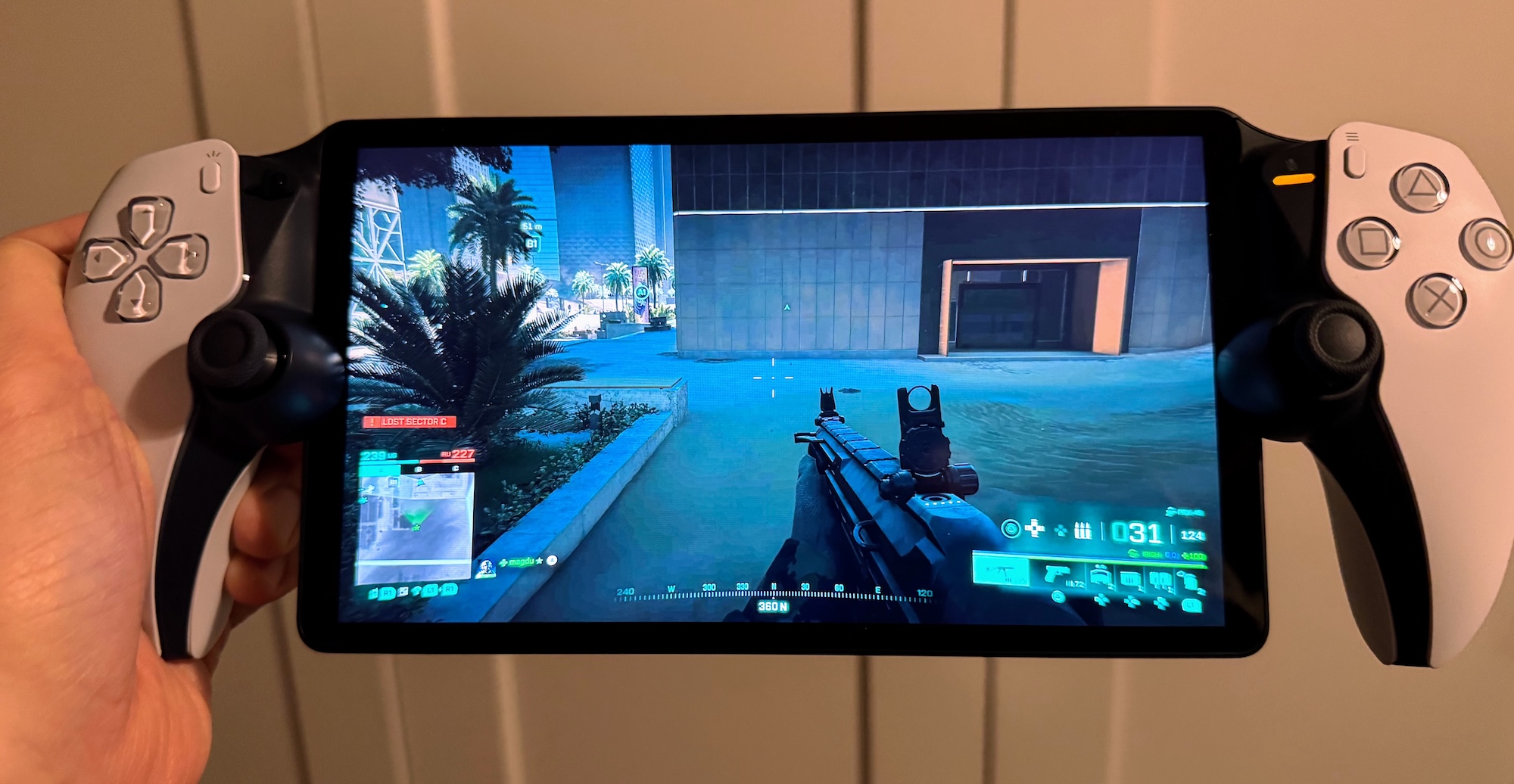
A minor inconvenience is the manual requirement to “add” PS Plus games to your library before streaming them (either directly via the PS5 or through the PS app). While not a dealbreaker, this additional step feels somewhat superfluous, especially when compared to the streamlined access offered by services like Xbox Cloud Gaming on Game Pass.
This functionality is officially supported in Sweden and requires a stable connection of at least 13 Mbps for 1080p, which most Swedish households currently have access to.
Streaming Games from Your Own PS5
PS Plus Premium contains a diverse selection of games, varying in genre and quality, but a primary appeal of the PS Portal is its ability to stream games you own and have downloaded to your own PS5. Our testing with Ghost of Yotei indicated that, while the experience is a notably more streamlined and less immersive than on a PS5 Pro with a proper OLED TV, it generally functions, albeit with performance dependent on your network connection. Firstly, your PS5 needs to transmit data via your local network, and then you need to receive it on the network you are currently utilizing. This experience is typically less seamless than streaming from the PS Plus Premium catalog (which originates from Sony’s dedicated servers), but it generally performs effectively with robust connections at both the source and destination (including via 5G mobile data).
One detail, unrelated to streaming, is that – similar to the Switch – many games are not optimized for play on a smaller, portable screen. We would caution against playing, for instance, Baldur’s Gate 3 or other RPGs that require extensive inventory management and text reading. Even in an action game like Battlefield 2042, the text can be excessively small.
Audio and Battery: A Mixed Bag
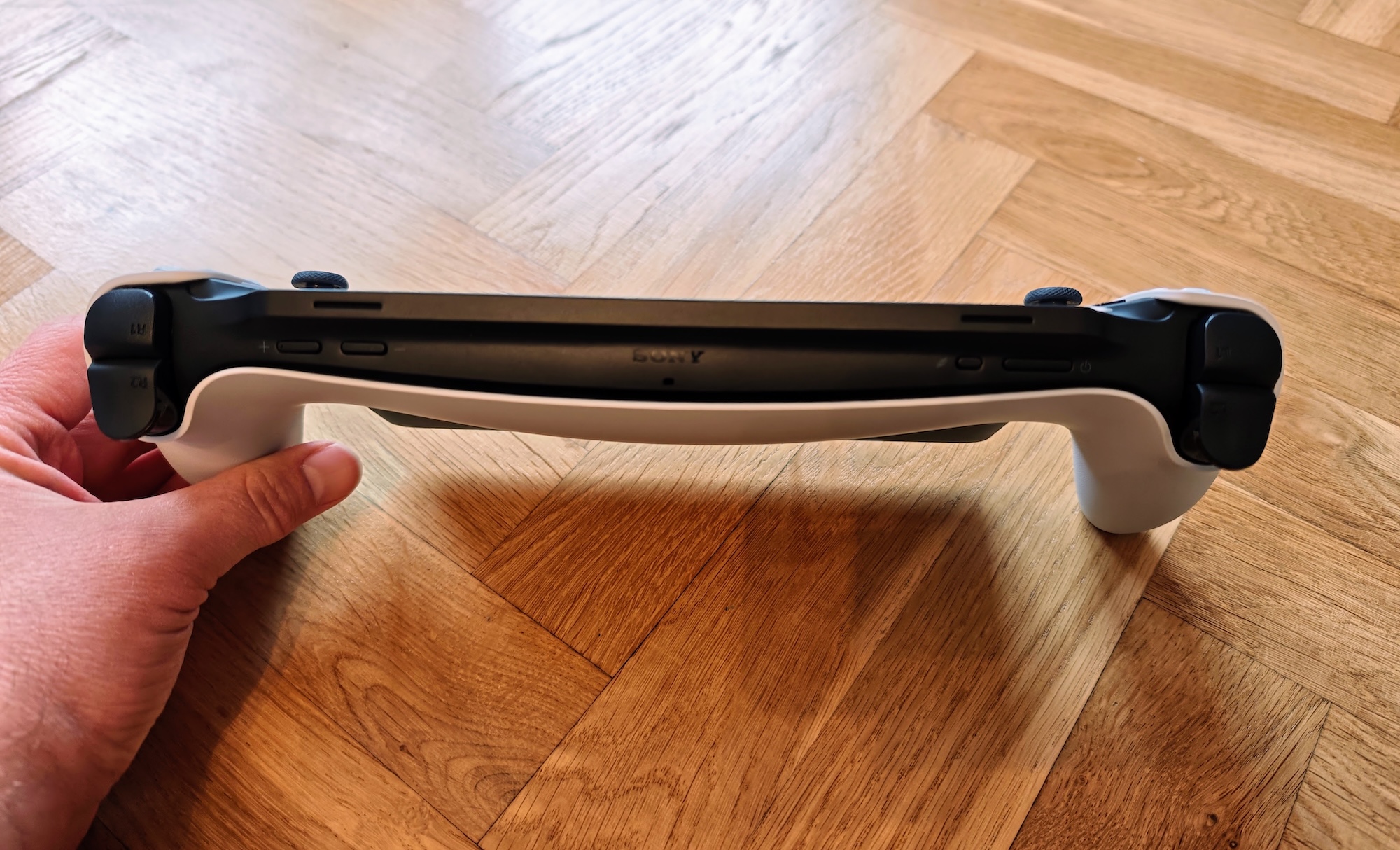
This aspect represents the device’s most significant limitation. Sony has opted to omit Bluetooth connectivity, potentially to optimize battery capacity. Consequently, users are unable to connect popular wireless headphones such as AirPods or premium models like the Bowers & Wilkins Px8 S2 wirelessly. Instead, audio output is limited to Sony’s proprietary “PlayStation Link” technology or a wired headset via the 3.5mm jack. This approach appears to be a strategic move to promote Pulse Explore earbuds, and it somewhat diminishes the overall user experience.
Our battery life tests yielded results between 4 and 6 hours, depending on screen brightness and the extent of haptic feedback usage. This is acceptable, providing sufficient duration for extended casual play or moderate travel; however, it does not surpass the battery performance of dedicated handhelds like the Switch or other Android-based devices.
The Competition: Portal vs. The World
Against Nintendo Switch / Steam Deck: The Switch and Steam Deck are standalone consoles that function independently of an internet connection, making them suitable for environments like air travel. The PS Portal, conversely, requires an active internet connection. For users who frequently travel to areas with limited or no internet access, the Portal may not be the ideal solution. However, for those primarily playing at home (addressing scenarios where the main television is in use) or with reliable Wi-Fi/mobile data access while traveling, the Portal provides a significantly lighter and more ergonomic experience, coupled with superior graphical fidelity compared to the Switch.
Against Mobile + Backbone One: While attaching a Backbone controller to a smartphone offers a more economical alternative (approximately 1200 SEK), mobile screens often feature an unfavorable aspect ratio (resulting in black bars), are prone to interruptions from notifications, and deplete phone battery life. The Portal provides a dedicated 8-inch screen with the appropriate 16:9 aspect ratio, alongside a full-size controller offering DualShock-level quality and haptic feedback. The overall experience on the Portal is distinctly more premium.
Buying Advice and Pricing
In Sweden, the price for the PlayStation Portal currently stands at approximately 2,500 SEK. This price point is half that of a Steam Deck and considerably less expensive than an iPad. For users already integrated into the PlayStation ecosystem, the Portal now represents a compelling accessory. However, it is important to note that accessing games from PlayStation’s cloud streaming catalog requires a PlayStation Plus Premium subscription, priced at 180 SEK per month or approximately 1,500 SEK annually. This recurring cost should be factored in for users wishing to stream titles not owned and locally installed on their PS5.
The recently launched 30th Anniversary Edition (the gray, retro-designed model) is functionally identical but is a limited-edition item primarily sought by collectors.
Conclusion PS Portal
The PlayStation Portal has evolved from an initially misunderstood accessory into a vital component of Sony’s gaming ecosystem. Through significant bug fixes and the integration of cloud streaming, it has transitioned from a niche accessory to an indispensable device for gamers with limited screen access or parents navigating family entertainment demands. While it does not yet represent a true hybrid console from Sony and may not directly supersede a Switch for travel, it undeniably offers the optimal experience for enjoying PlayStation games in various home settings or on the go (contingent on internet availability).
PlayStation provided review samples for this test. Material providers have no editorial influence on our reviews.
