TL;DR
Step back to the vibrant 1950s Coney Island with "Wonder Wheel," a Woody Allen film exploring tangled relationships. Ginny, a troubled waitress, is married to carousel operator Humpty, whose estranged daughter Carolina arrives seeking refuge. The arrival sparks a love triangle when Ginny's new flame, Mickey, shows interest in Carolina. While Kate Winslet shines as Ginny and Juno Temple impresses as Carolina, Jim Belushi's performance is inconsistent, and Justin Timberlake is merely adequate. The film boasts stunning visuals but suffers from predictable plotting and uneven performances, making it a mixed bag. Discover if this visually rich drama is worth your time!
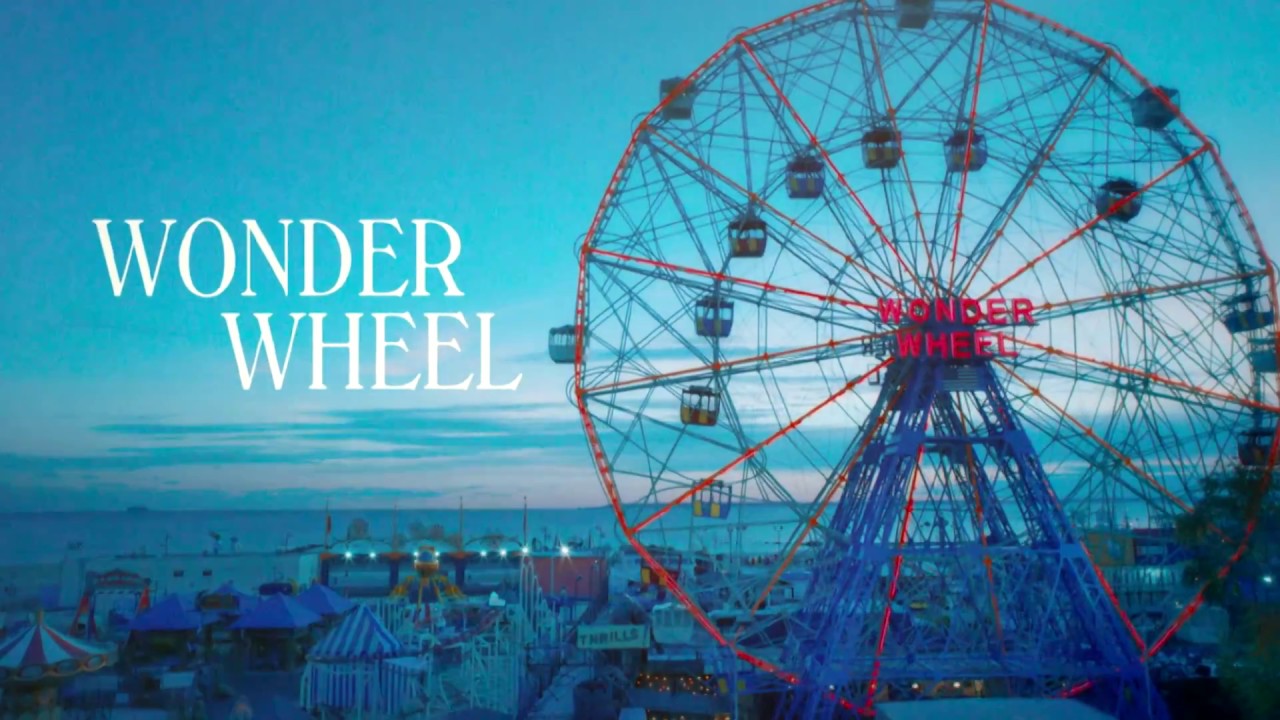
Wonder Wheel is set in Coney Island, New York, during the vibrant 1950s. The narrative centers on Ginny (Kate Winslet), a waitress at a seafood restaurant, and her marriage to Humpty (Jim Belushi), a recovering alcoholic who operates a carousel. They lead a challenging but relatively stable existence in the shadow of the iconic Ferris wheel. This tranquility is disrupted by the unexpected arrival of Humpty’s daughter, Carolina (Juno Temple). Fleeing from her gangster boyfriend and facing a constant death threat, Carolina seeks refuge with her estranged father, believing it’s the one place her pursuers won’t expect to find her. Humpty had disowned Carolina when she chose to marry her husband. Ginny is initially resentful of Carolina’s presence but finds herself drawn to the attention of Mickey (Justin Timberlake), a young and attractive lifeguard. The situation escalates as Mickey begins to show interest in Carolina, igniting a complex love triangle.
Having viewed a significant number of Woody Allen’s films, I appreciate his distinctive style and his willingness to explore diverse genres. A notable aspect of his work, which can sometimes be a double-edged sword, is his casting choices. He frequently demonstrates an insightful approach, often selecting actors for roles that challenge their established personas. In Wonder Wheel, the casting proves to be a mixed bag.
Kate Winslet delivers a compelling performance as Ginny, effectively portraying the character’s fragility and guiding the audience through a turbulent emotional journey. However, despite the film’s focus on Ginny, her agency feels somewhat limited, and her decisions become predictable relatively early in the narrative.
Jim Belushi, the younger brother of John (Blues Brothers) Belushi, has not traditionally been known for his dramatic roles. His range is somewhat restricted, and while he arguably delivers his strongest performance to date, it ultimately falls short. His portrayal occasionally feels exaggerated, bordering on caricature, of a Coney Island amusement park worker in the 1950s.
Juno Temple, in contrast, delivers a commendable performance as Carolina. She conveys a sense of vulnerability and warmth, making her story believable. However, her striking beauty feels somewhat incongruous given her father’s appearance. This observation highlights a potential weakness in Woody Allen’s script. Carolina’s beauty is emphasized to the point where it overshadows her personality, becoming the primary reason for the attention she receives. While she possesses a distinct personality, it remains secondary to her physical appearance, a regrettably outdated trope.
Justin Timberlake plays Mickey, a lifeguard by day and an aspiring playwright by night. He serves as the film’s narrator, breaking the fourth wall to address the audience directly. Timberlake’s performance is adequate, but he has demonstrated stronger dramatic capabilities in previous roles, such as in Black Snake Moan.
In conclusion, Wonder Wheel is an inconsistent film, falling short of Woody Allen’s best work. It is possible that Allen intended the film to be interpreted as one of Mickey’s stories, in which he has cast himself and others in his life. In this interpretation, the exaggerated portrayal of Humpty and the striking beauty of Carolina could be seen as narrative liberties taken within the context of the story. However, regardless of this potential intent, the film ultimately lacks surprise and narrative coherence.
Despite its shortcomings, Wonder Wheel offers sufficient redeeming qualities to be engaging, and its visual aesthetic and setting are undeniably impressive.
https://www.youtube.com/watch?v=u9FWLlRQ21c
